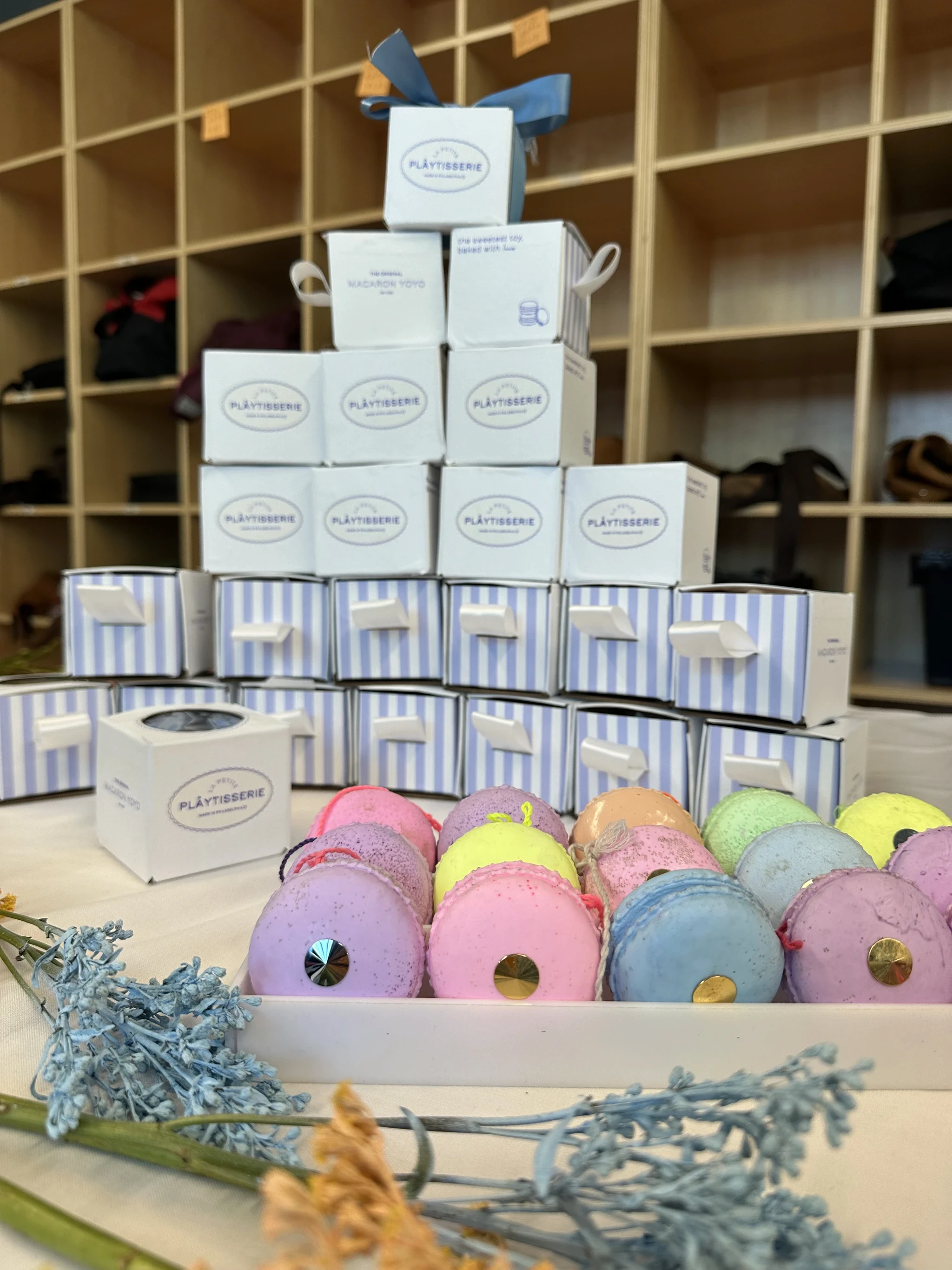
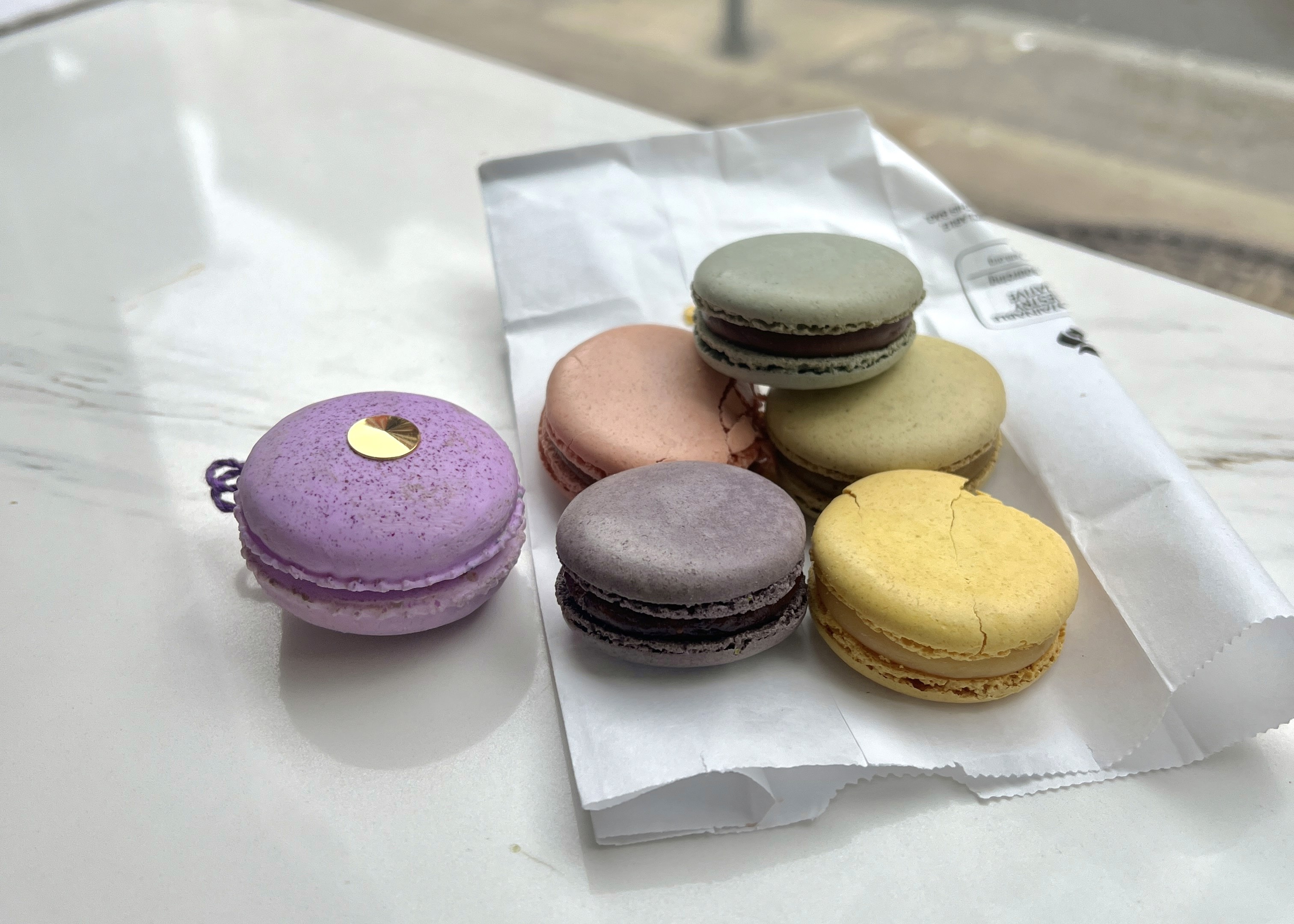
I crafted the brand identity, packaging, and production process for a macaron-inspired collectible yoyo. Working with 2 mechanical engineers, we developed the internal mechanism and manufactured a limited run of 32 units.
The collection sold out at the Penn Venture Lab Spring Market.


32/32
Units Sold
$26
Price per Unit
5
Colorways
CONTEXT
Producing and Selling Collectible Yoyos for a Spring Market
Each May, the Penn Venture Lab hosts a market for students to launch and sell small-batch product lines. This event attracts a diverse audience shopping for Mother’s Day and graduation gifts.
My team ideated, hand-produced, and sold 32 pâtisserie-themed yoyos as a giftable toy that appeals to multiple generations.
TARGET AUDIENCE

Students

Mothers

Visiting Families
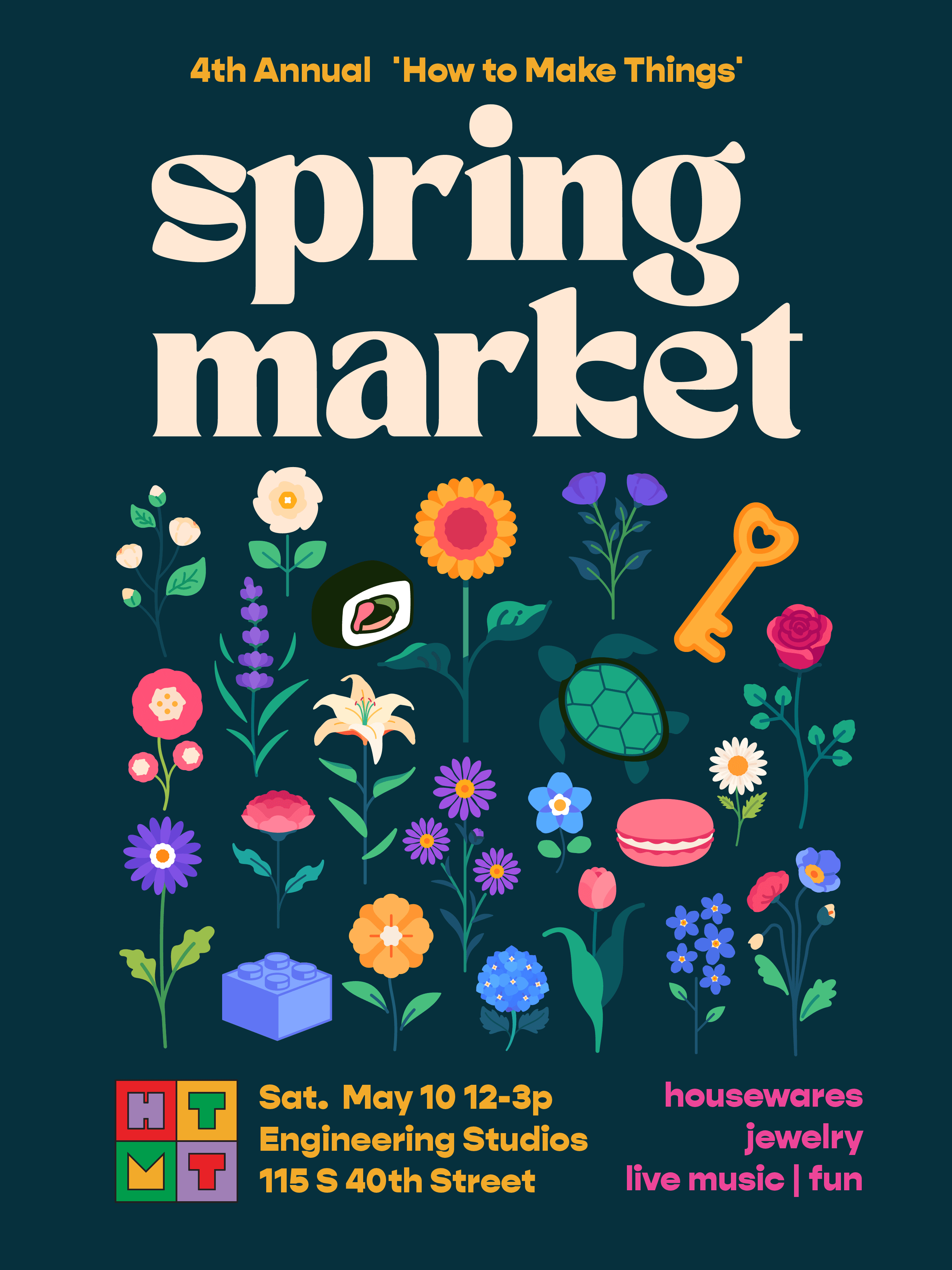
Spring Market Poster
IDEA
Why Yoyos?
The team wanted to create a product that fit the following criteria:
Reproducible
Small and simple enough to prototype, iterate, and manufacture multiple units within a short timeline
Physically Interactive
Encourages hands-on play in contrast to screen-based experiences
Nostalgic
Draws on memories of childhood to create emotional appeal across age groups
Engineering Challenge
Provides a meaningful mechanical design challenge for the engineering team
Why Macaron Yoyos?
The team bonded over getting coffee at the nearest Paris Baguette before each meeting.
Eventually, the bakery's macarons sparked inspiration, as its shape and size made it the perfect analog for a yoyo.
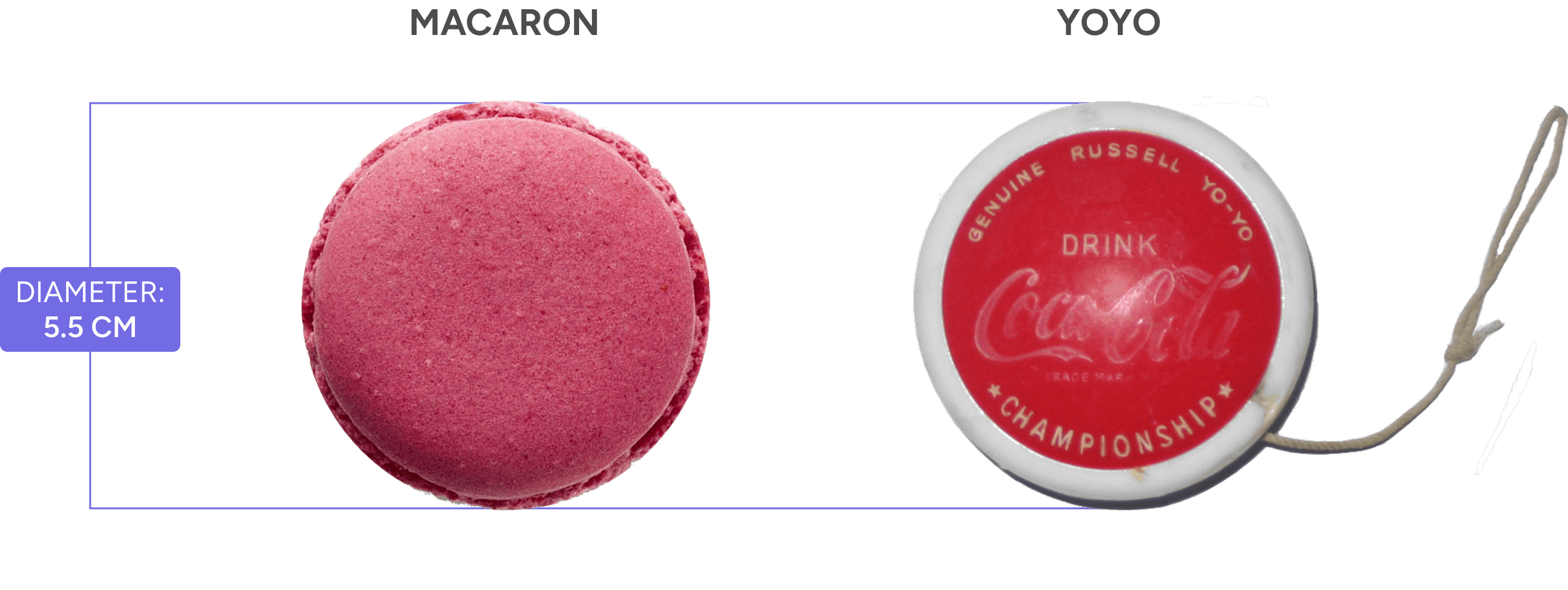
Macaron vs. Yoyo Comparison
BRANDING & PACKAGING
Play Meets Pâtisserie
Soft pastels, cursive script, hand-drawn illustrations, and macaron "flavors" come together to shape the sweet brand identity.
Assets like stickers and playfully named macaron "flavors"
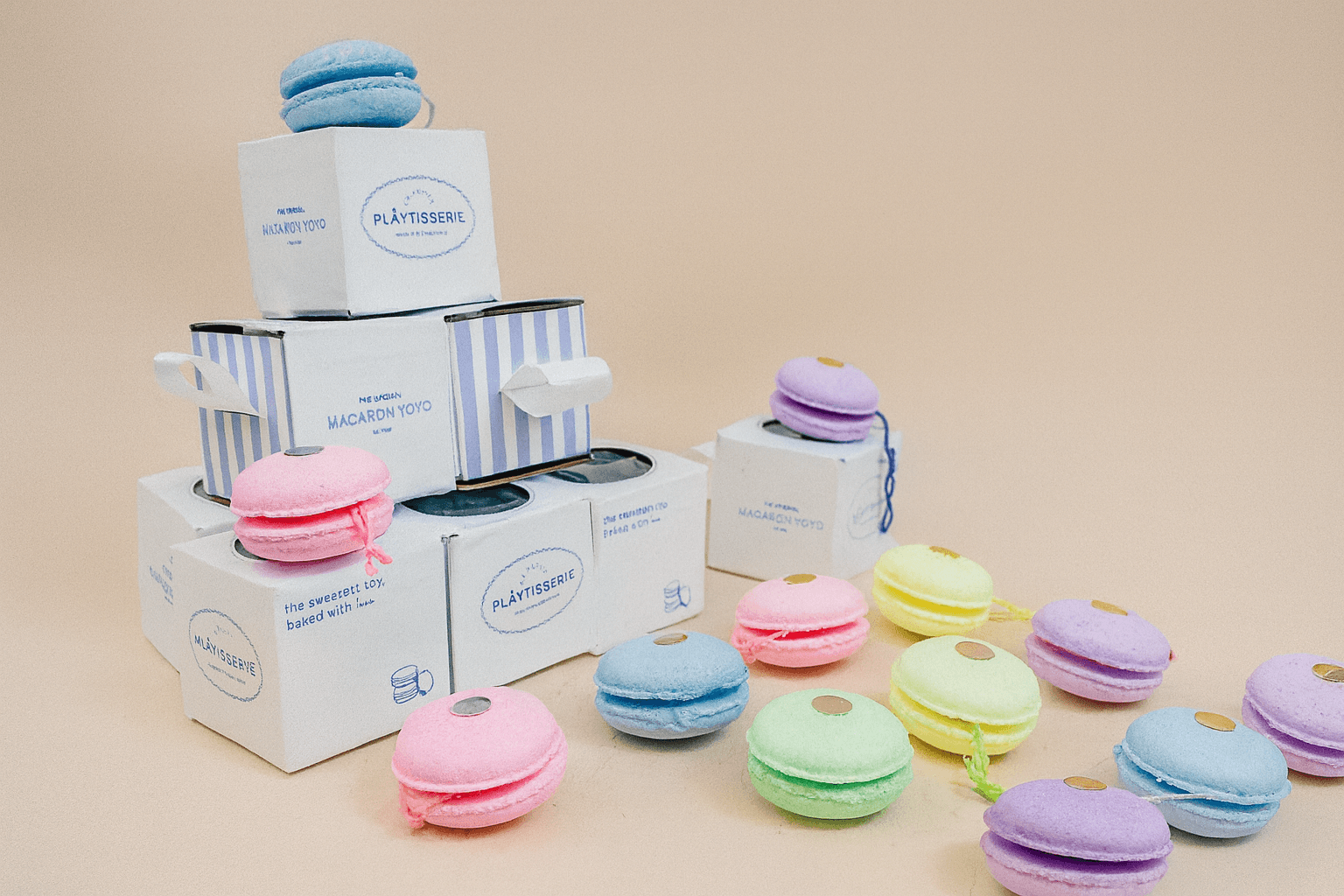
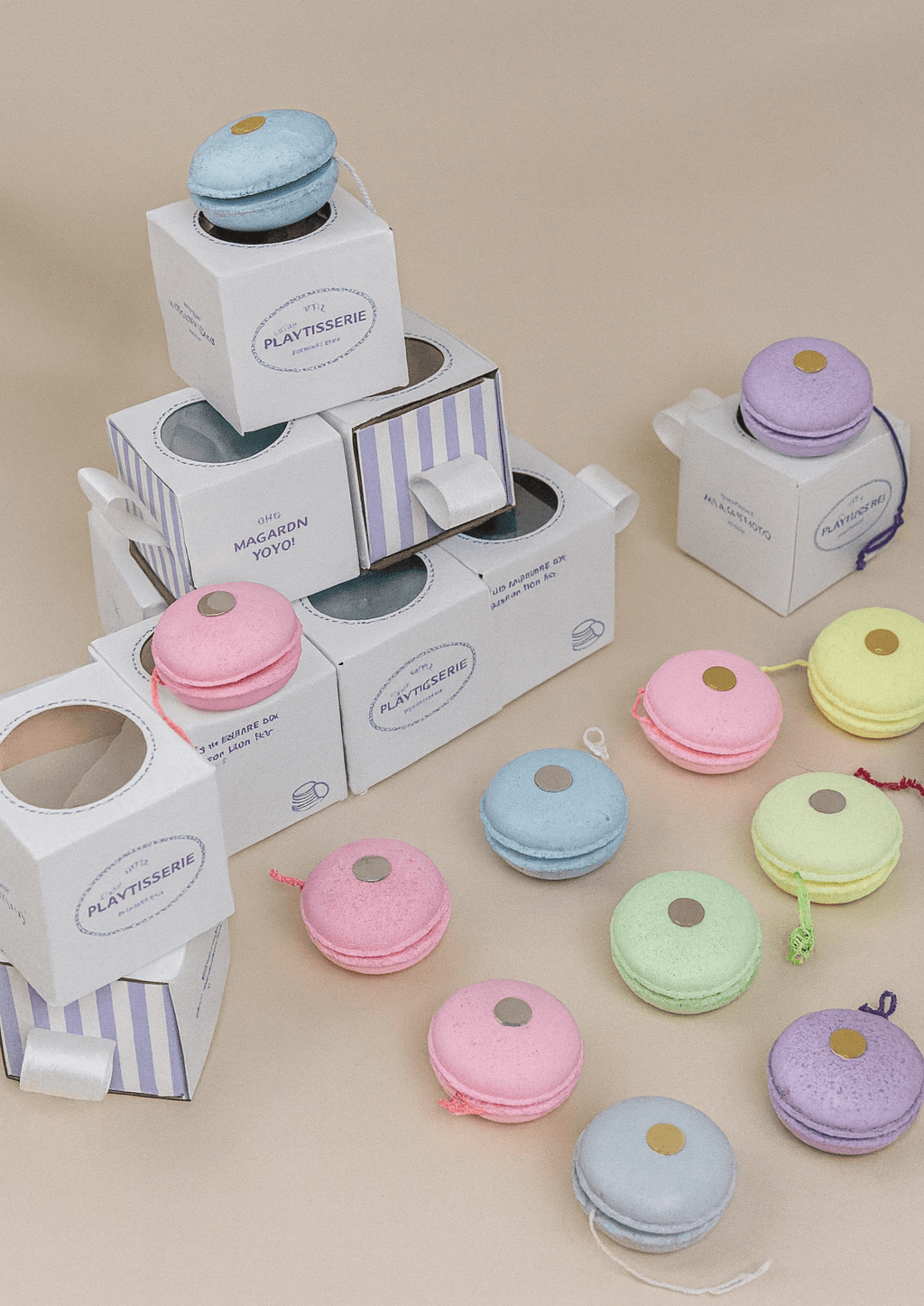
Product Photography
Branding Guide
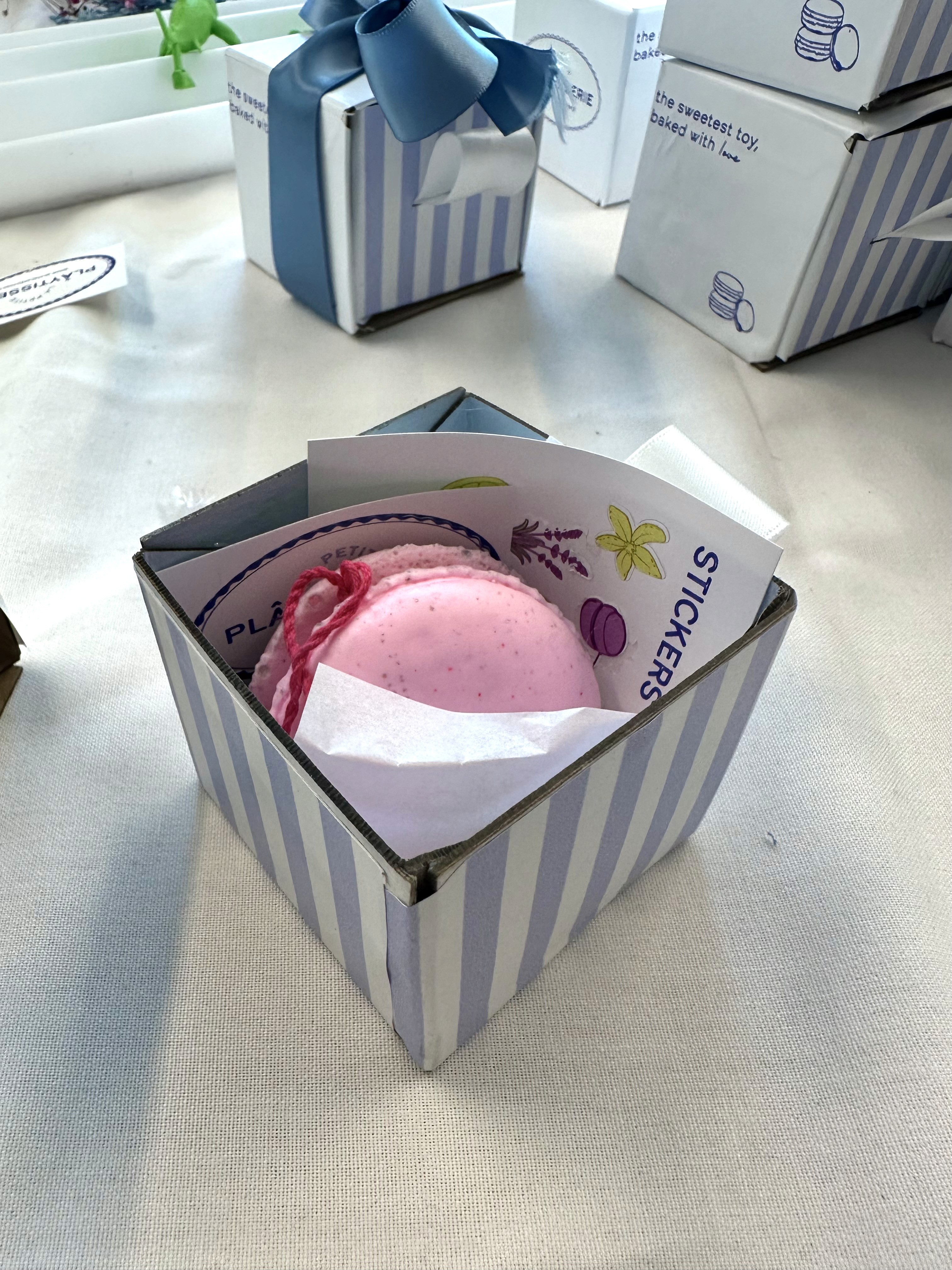
Complete with a ribbon pull and vibrant interiors, each box feels crafted with intention.
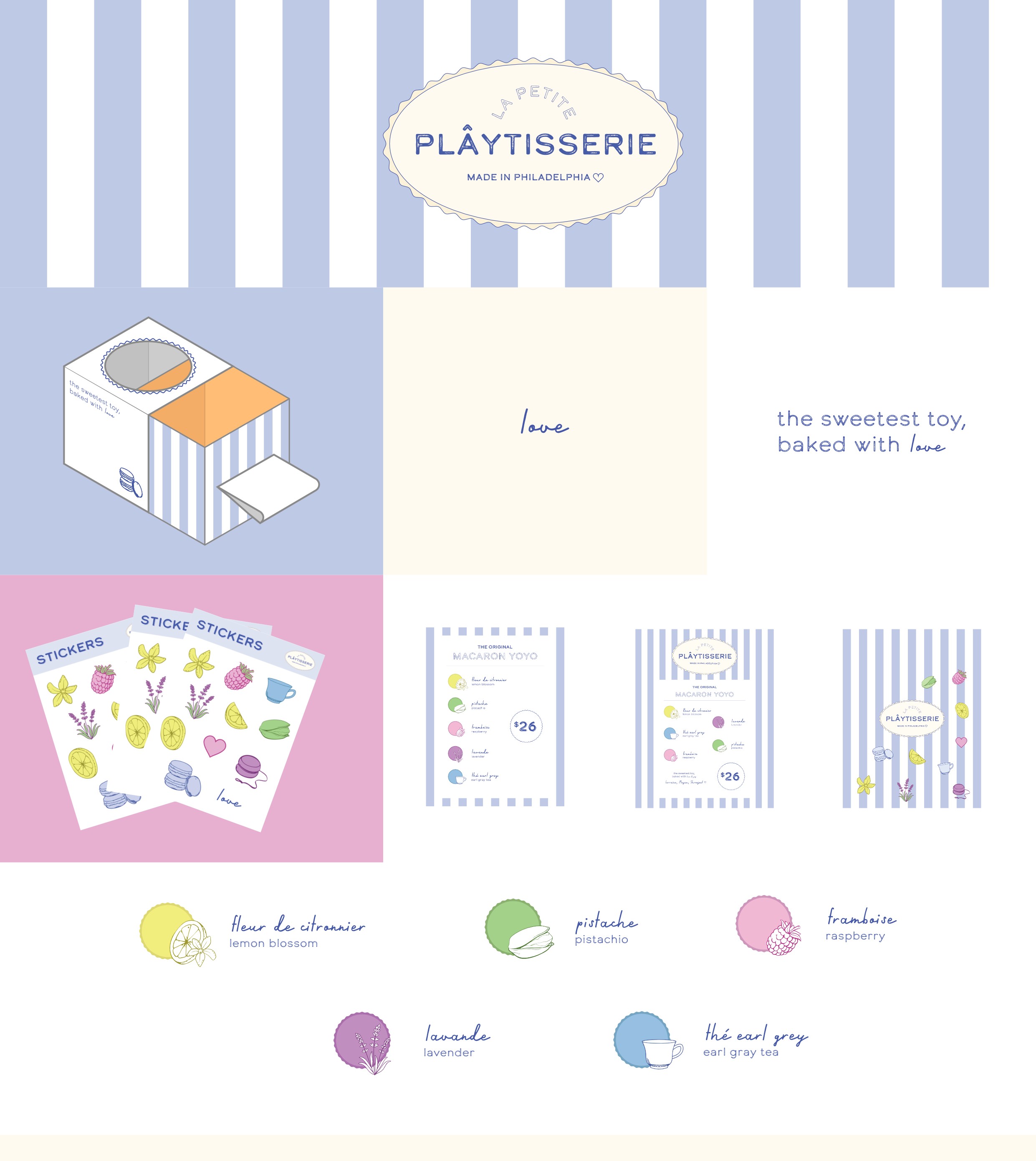
Branding Guide
Sticker Customizations
Complete with a ribbon pull and vibrant interiors, each box feels crafted with intention.
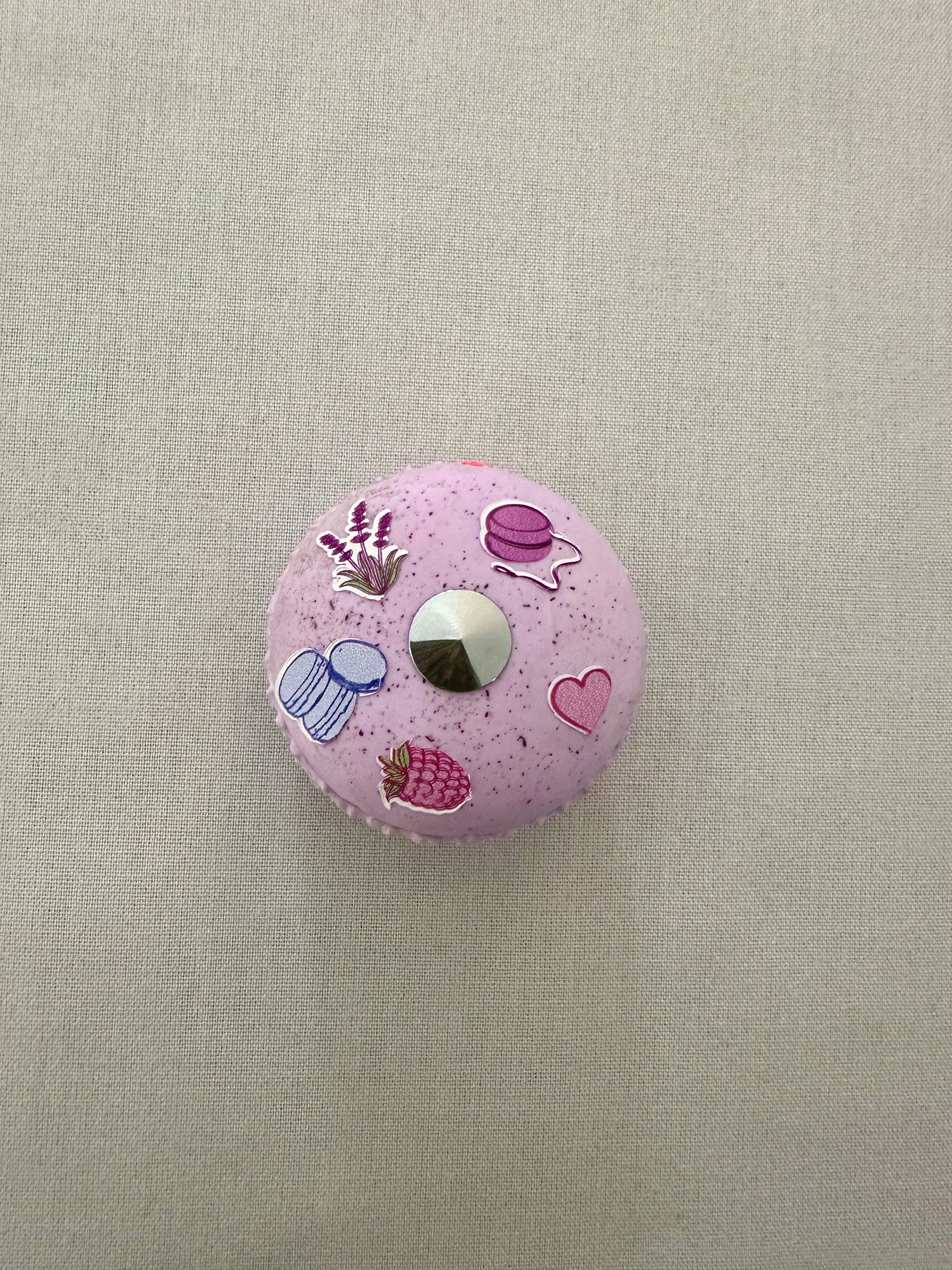
Stickers on Yoyo
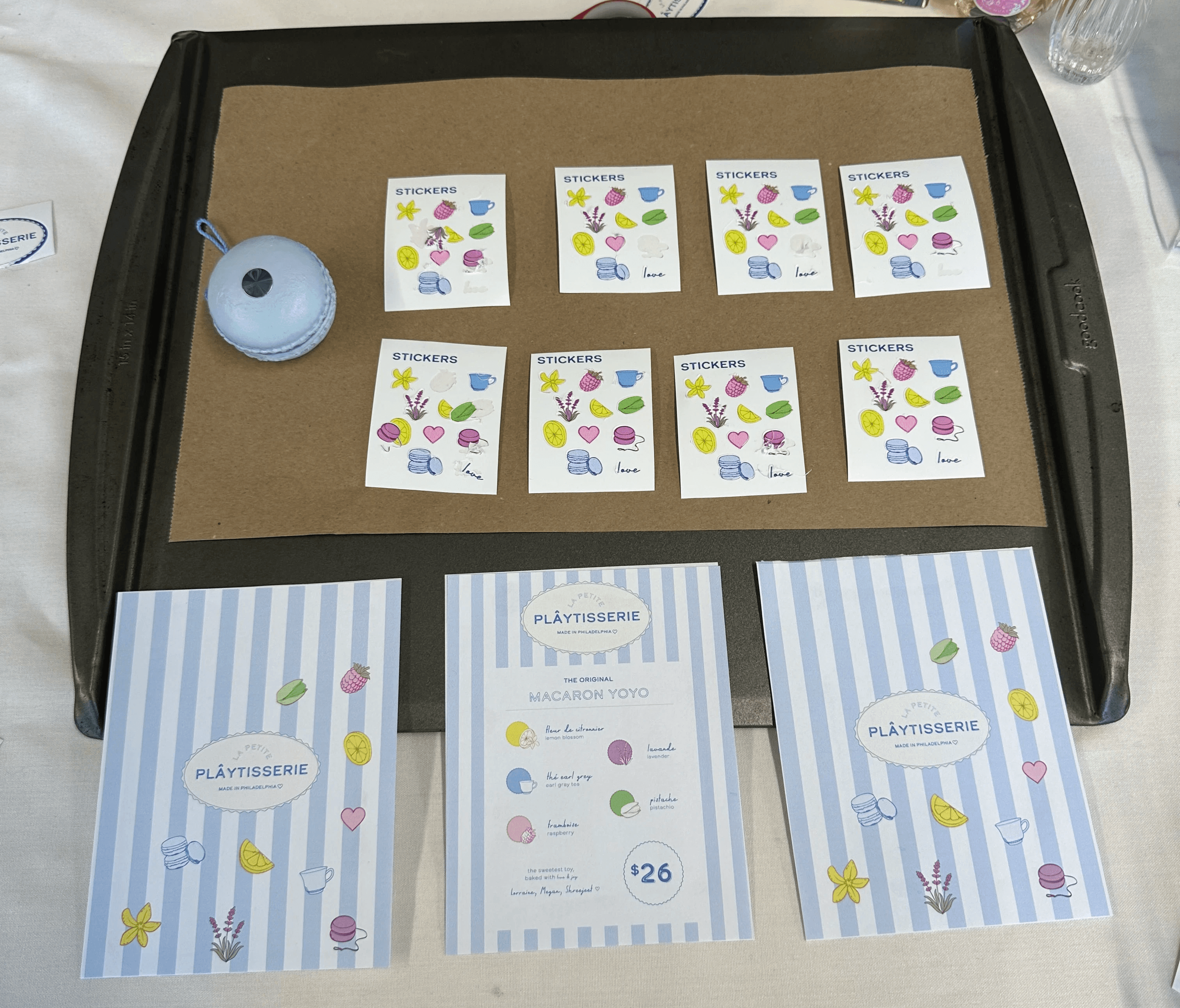
Sticker Sheets & Menus
Custom Packaging for a Luxury Dessert Box
Complete with a ribbon pull and vibrant interiors, each box feels crafted with intention.
Details, such as wax paper lining and the circular product reveal window, enhance the dessert-like unboxing experience.
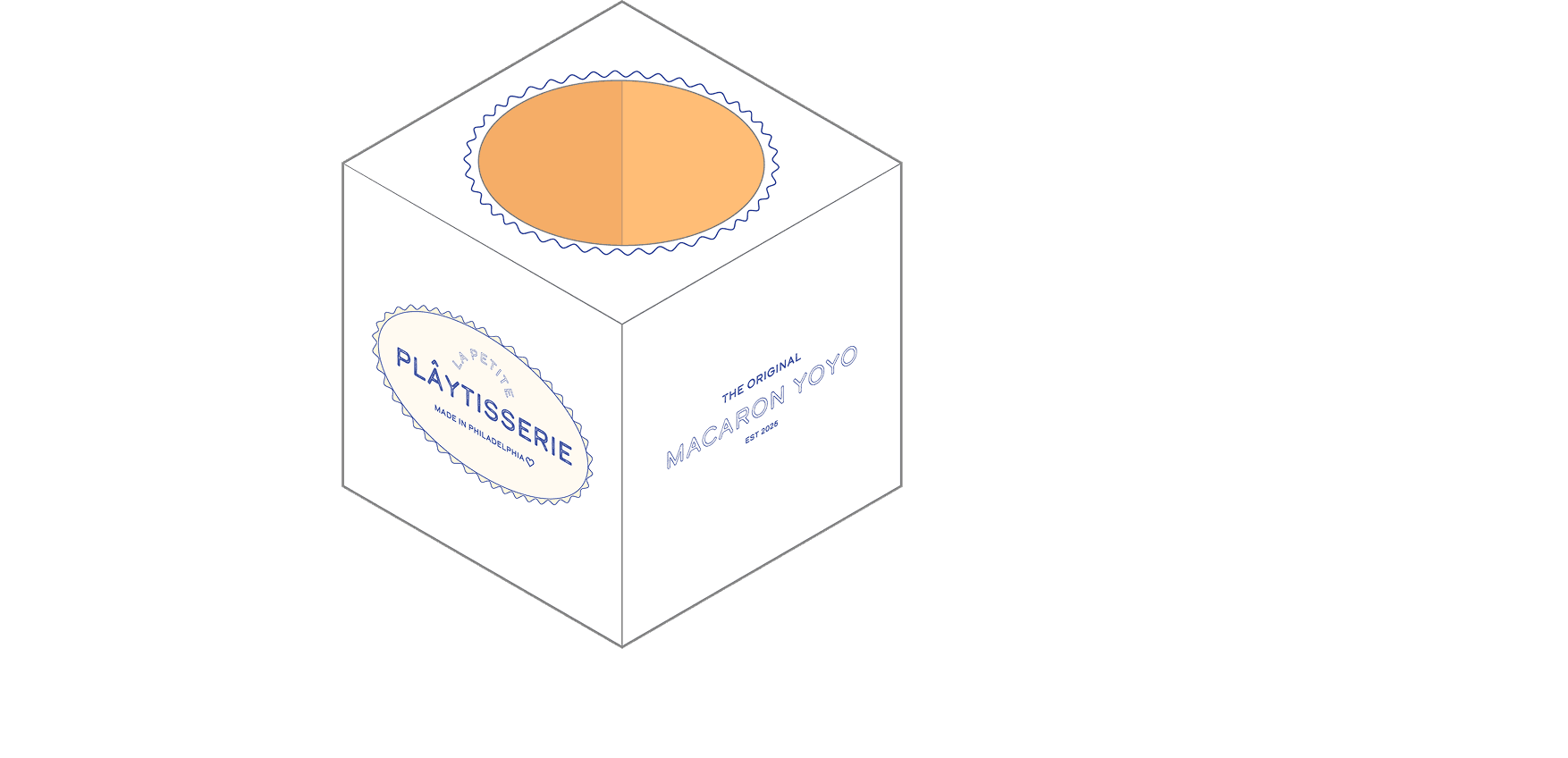
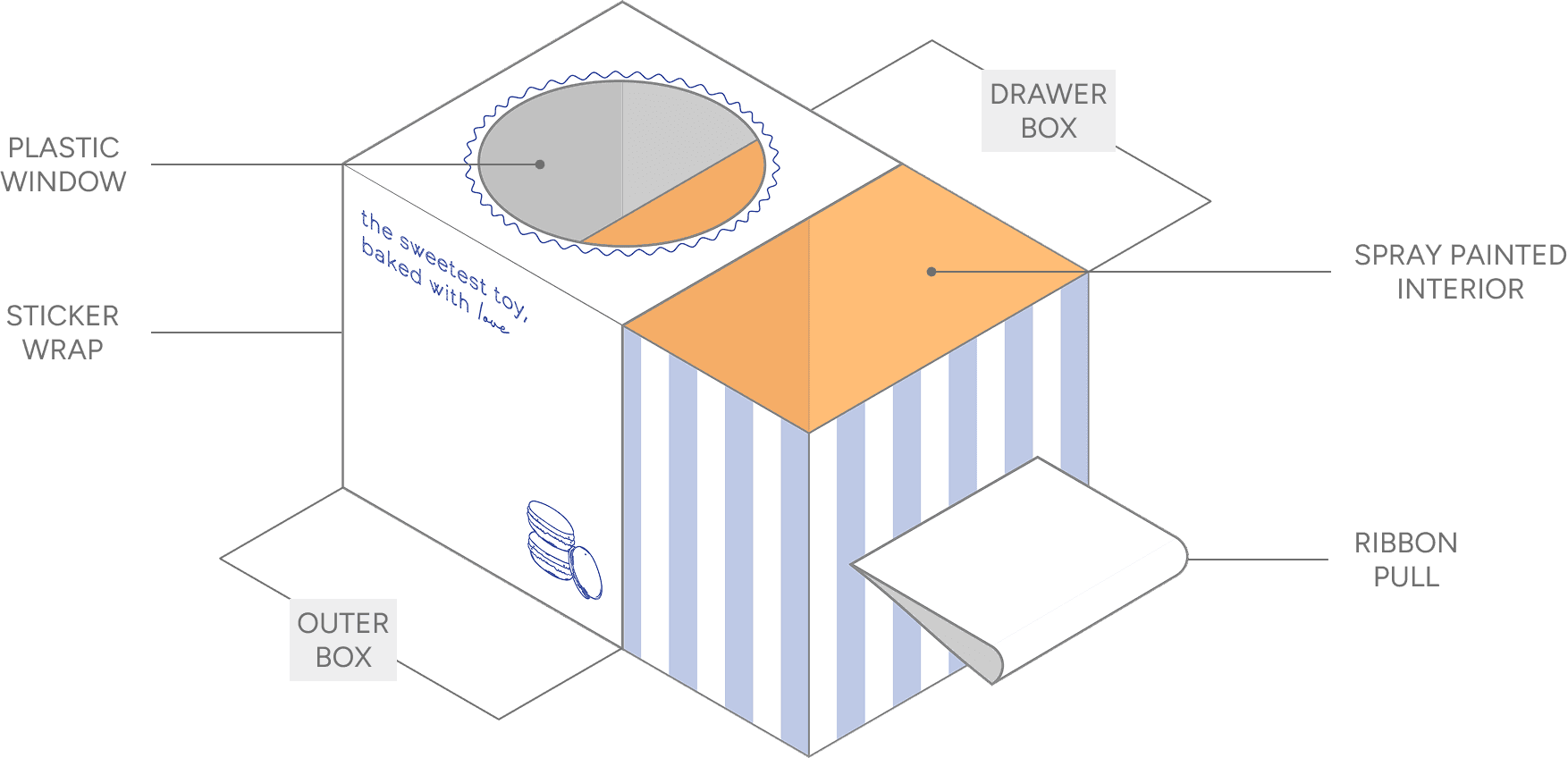
Packaging Components
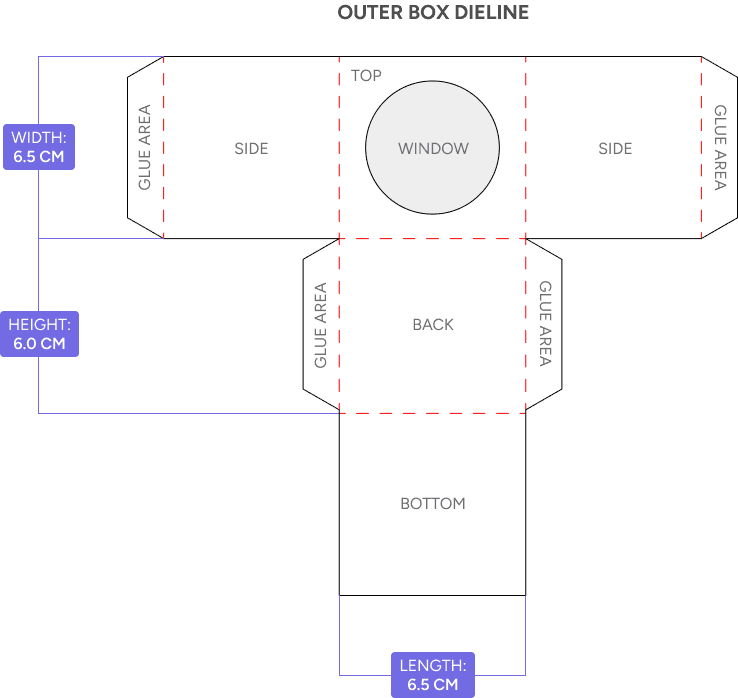
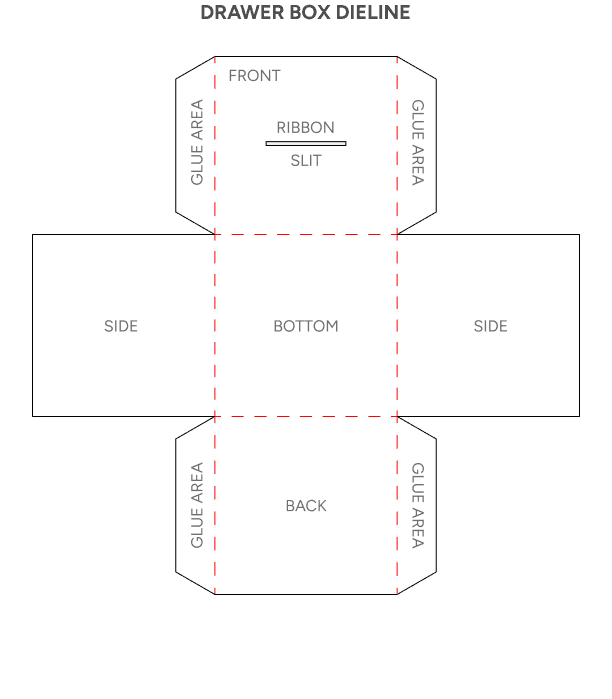
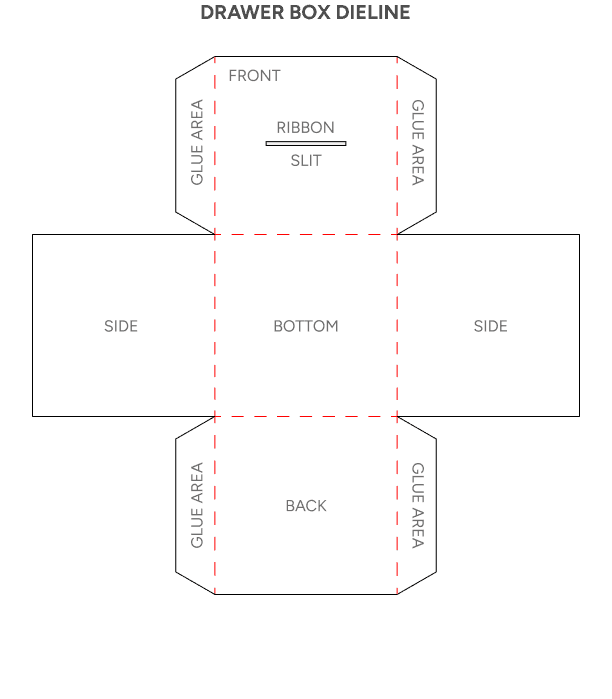
Packaging Dielines & Dimensions
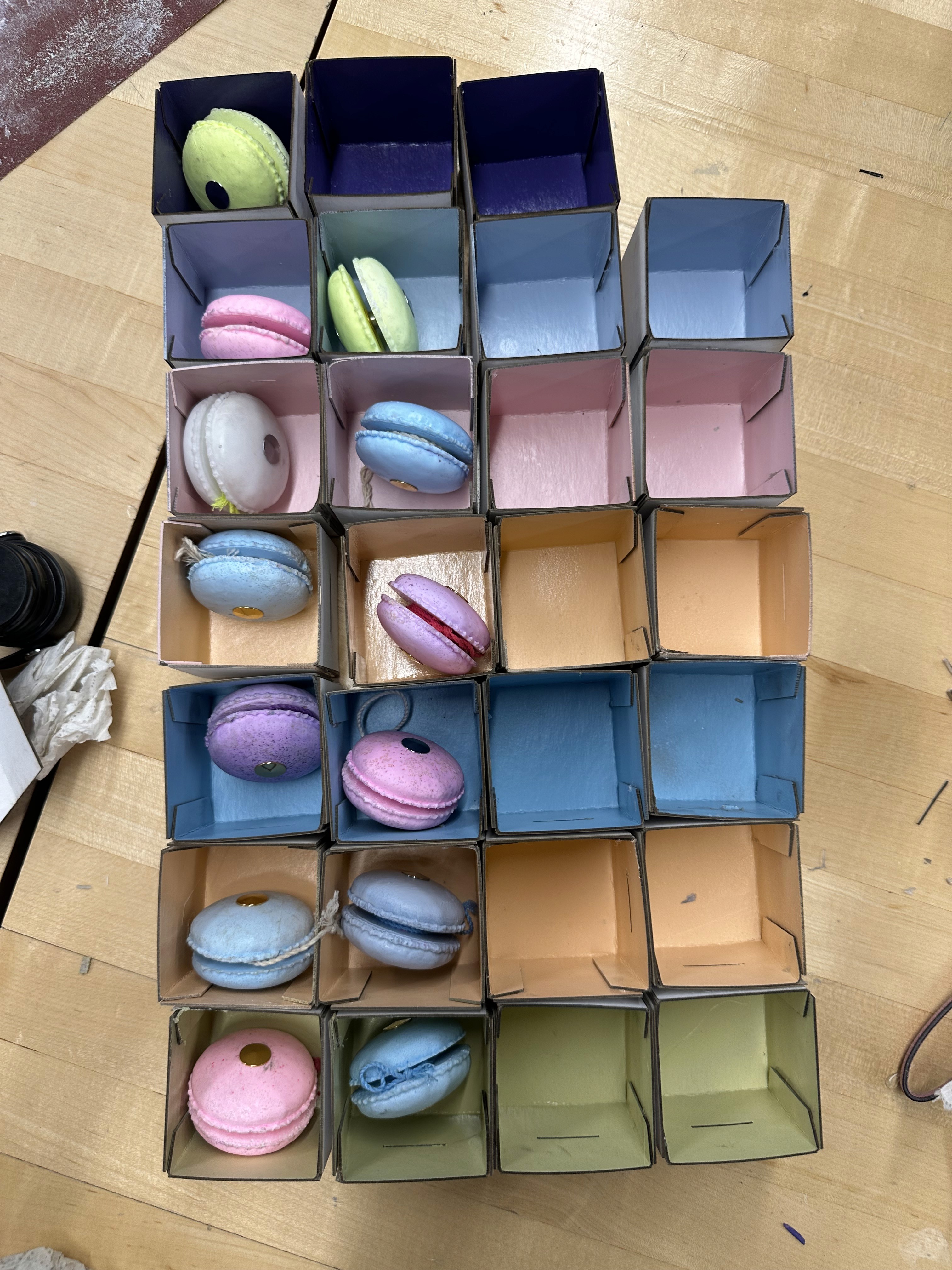
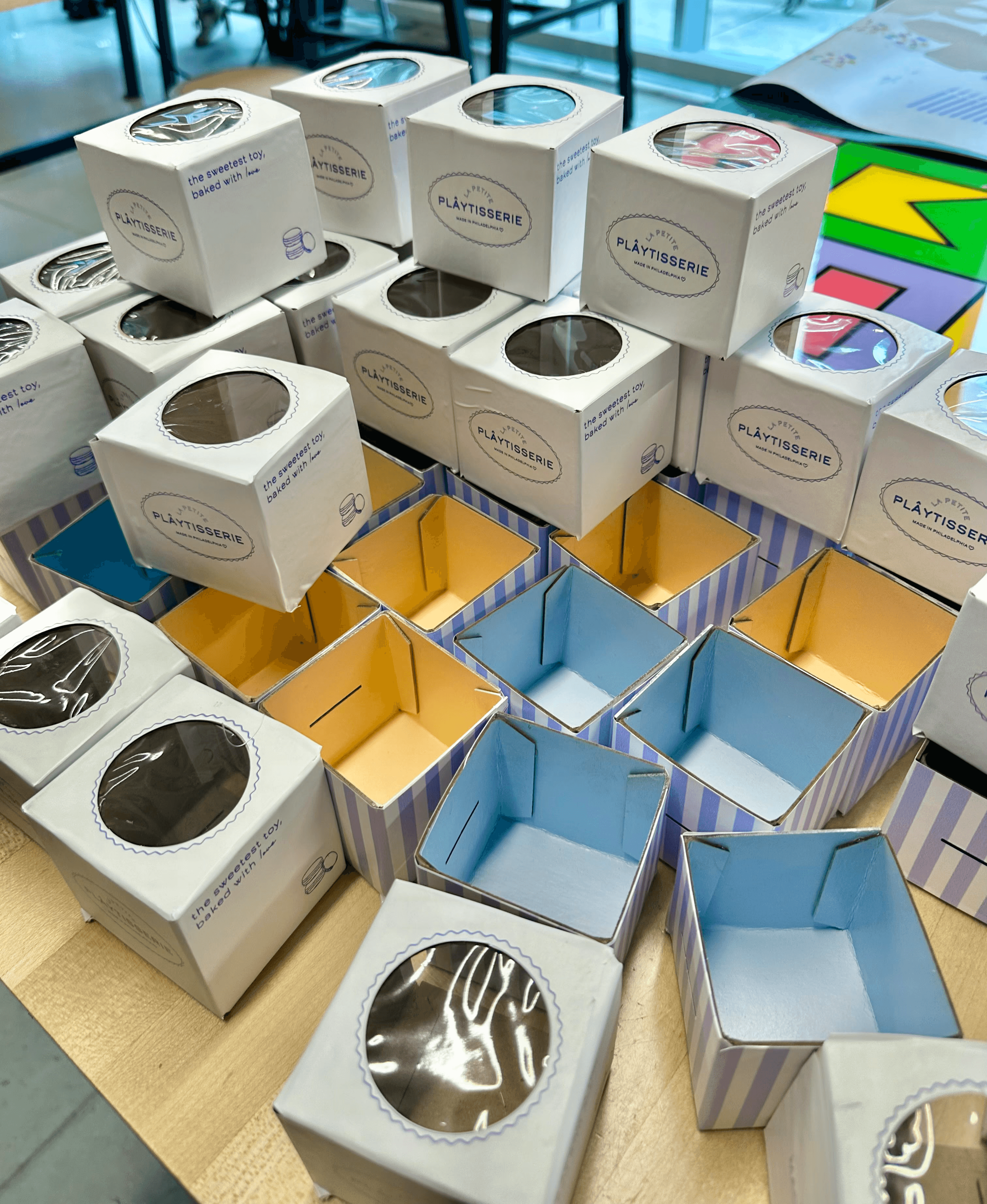
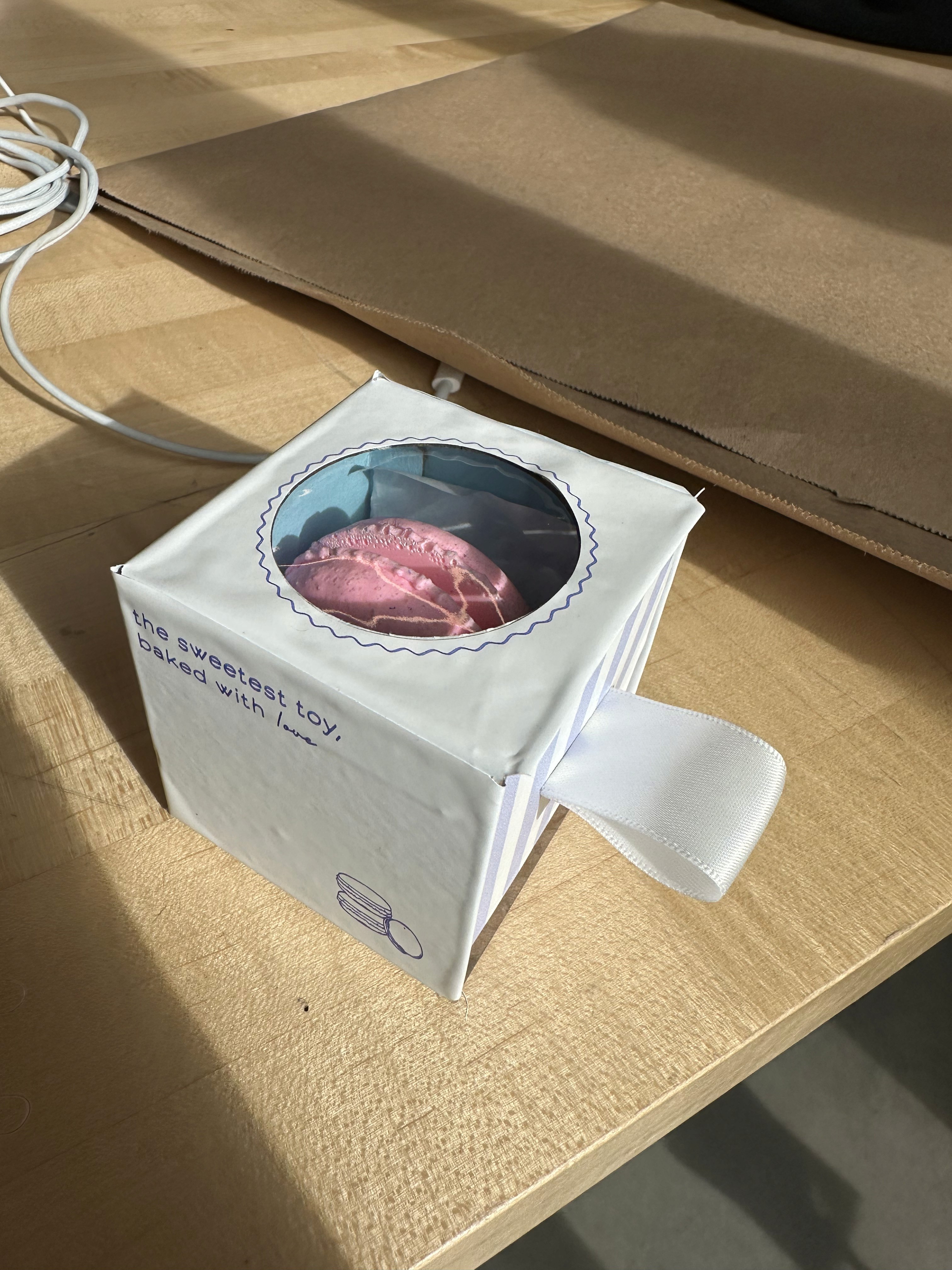
Production BTS
PRODUCTION
From Model to Market
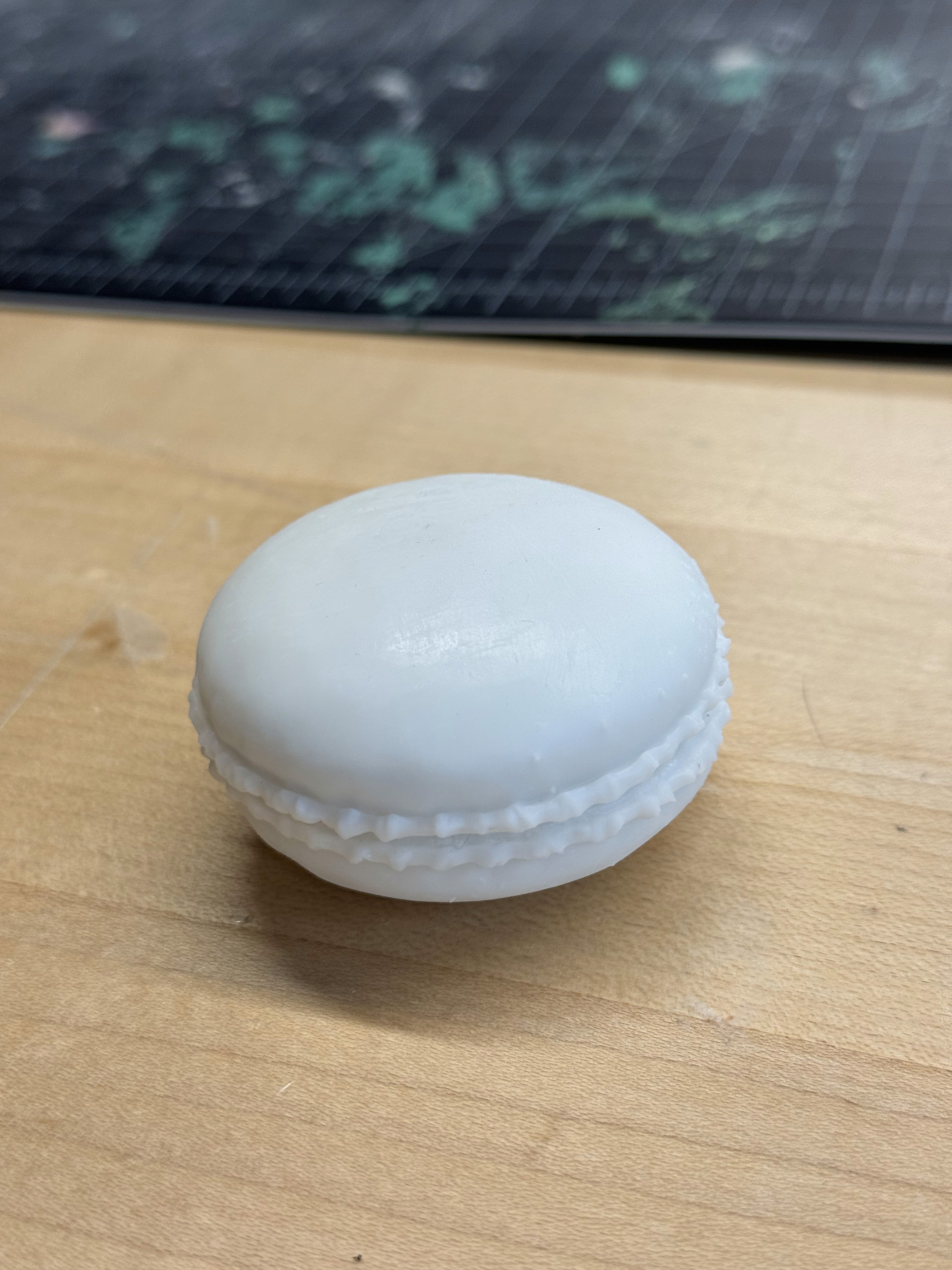
The production process started with a digital 3D model.
We then created a 3D print of the model to create molds, which allowed us to mass produce identical parts for our product.
3D Modeling
3D scan real macaron and upload to Solidworks
Model yoyo mechanical components in Solidworks:
Macaron split into halves
Ball bearing
Axle
Axle caps
3D Model of Macaron Yoyo (SolidWorks)
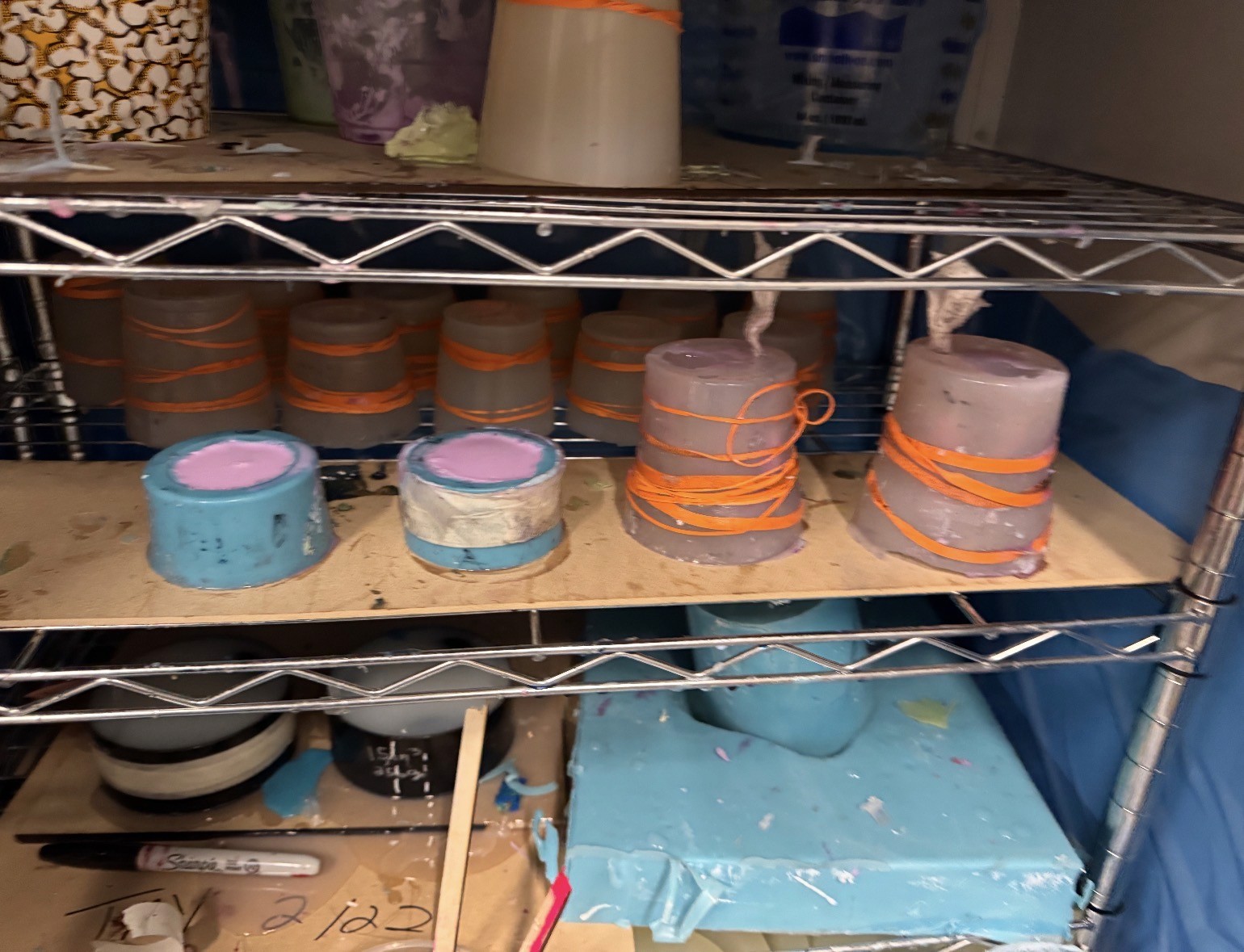
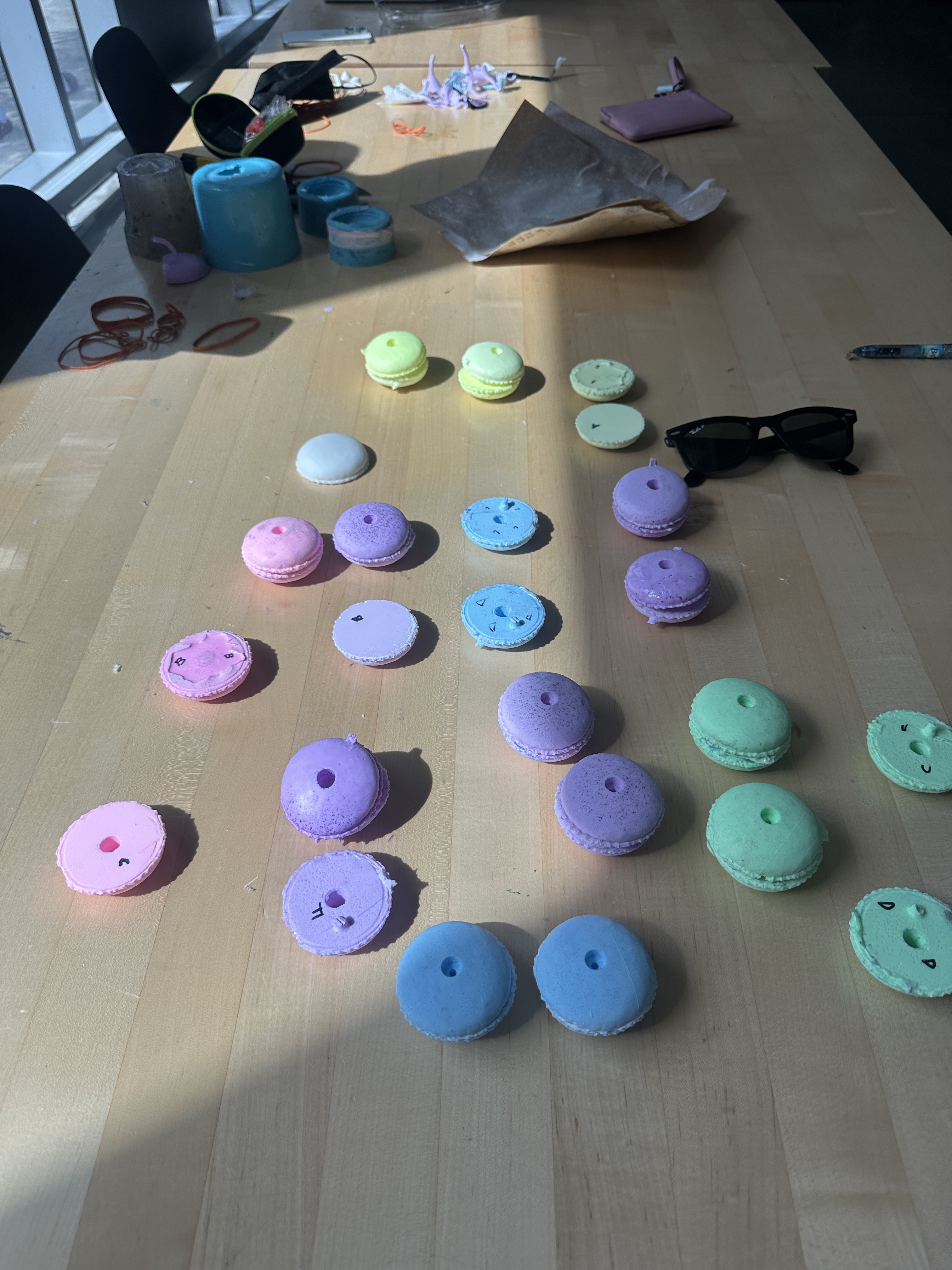
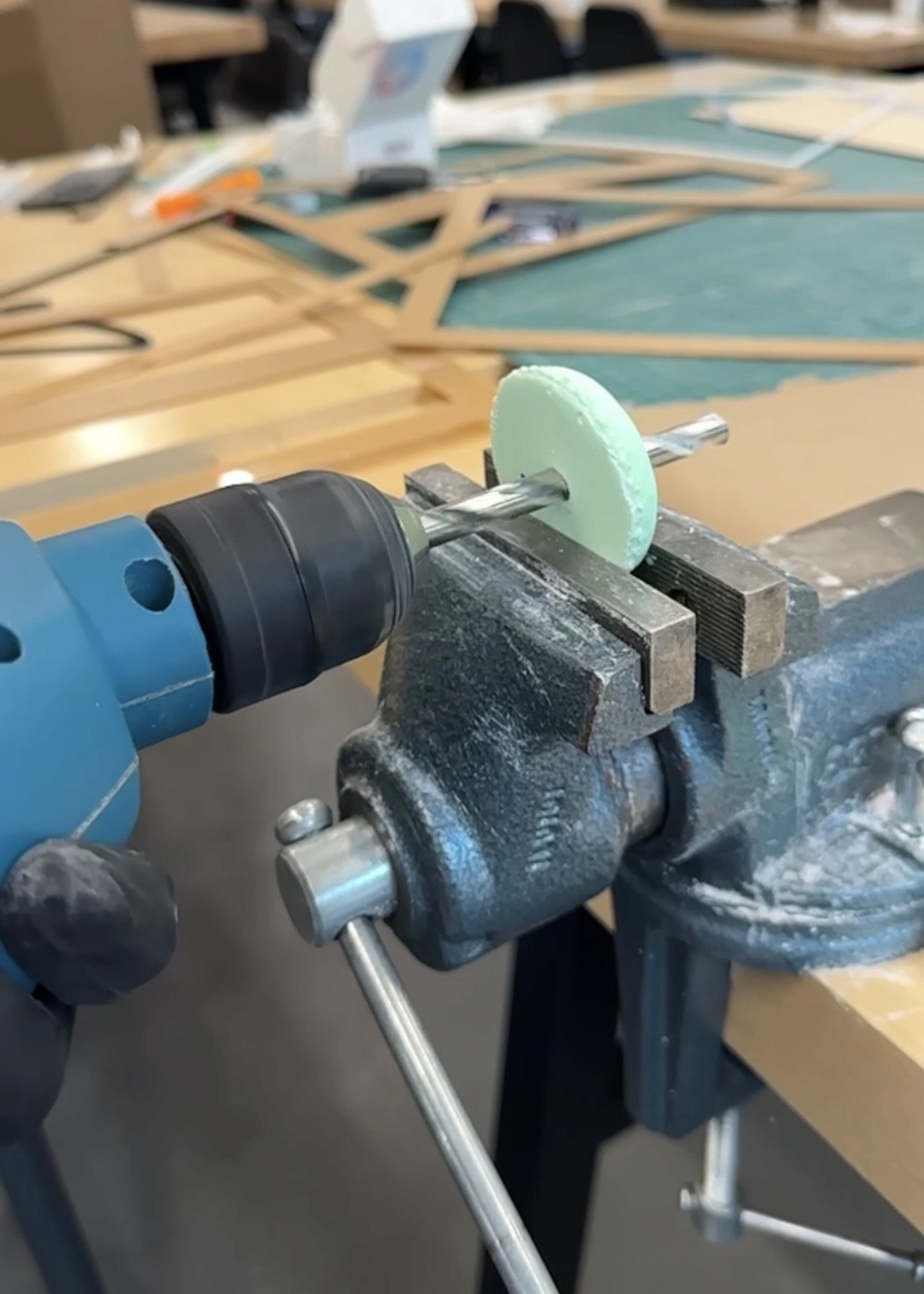
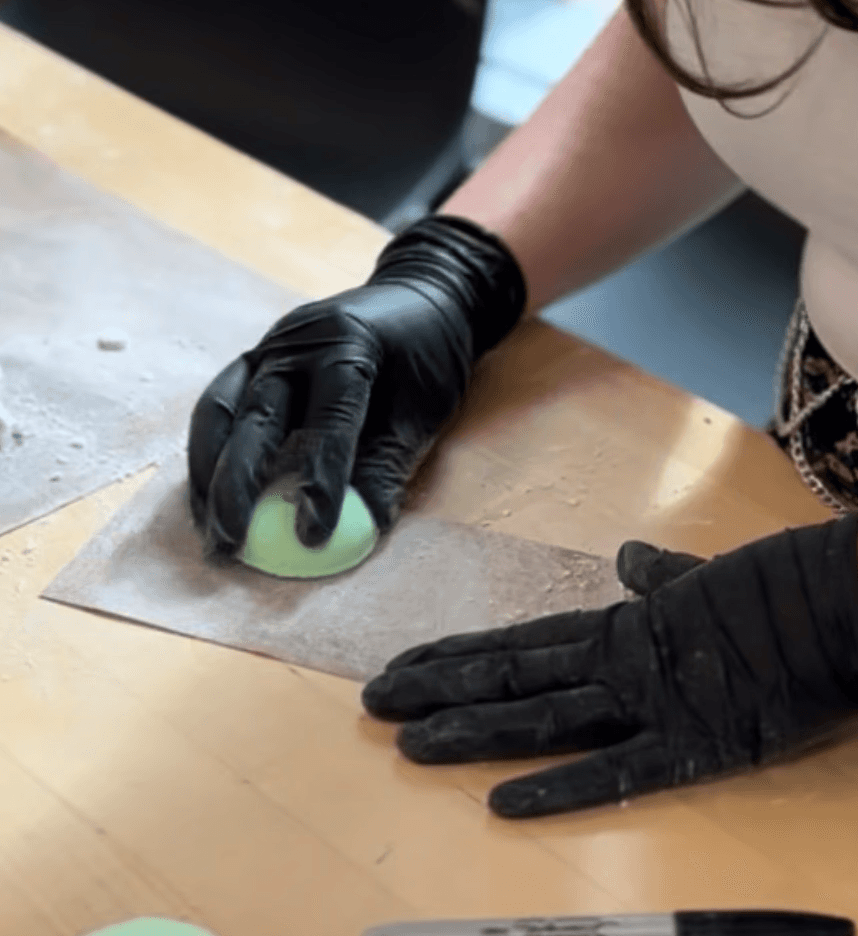
Manufacturing Process
3D print macaron halves
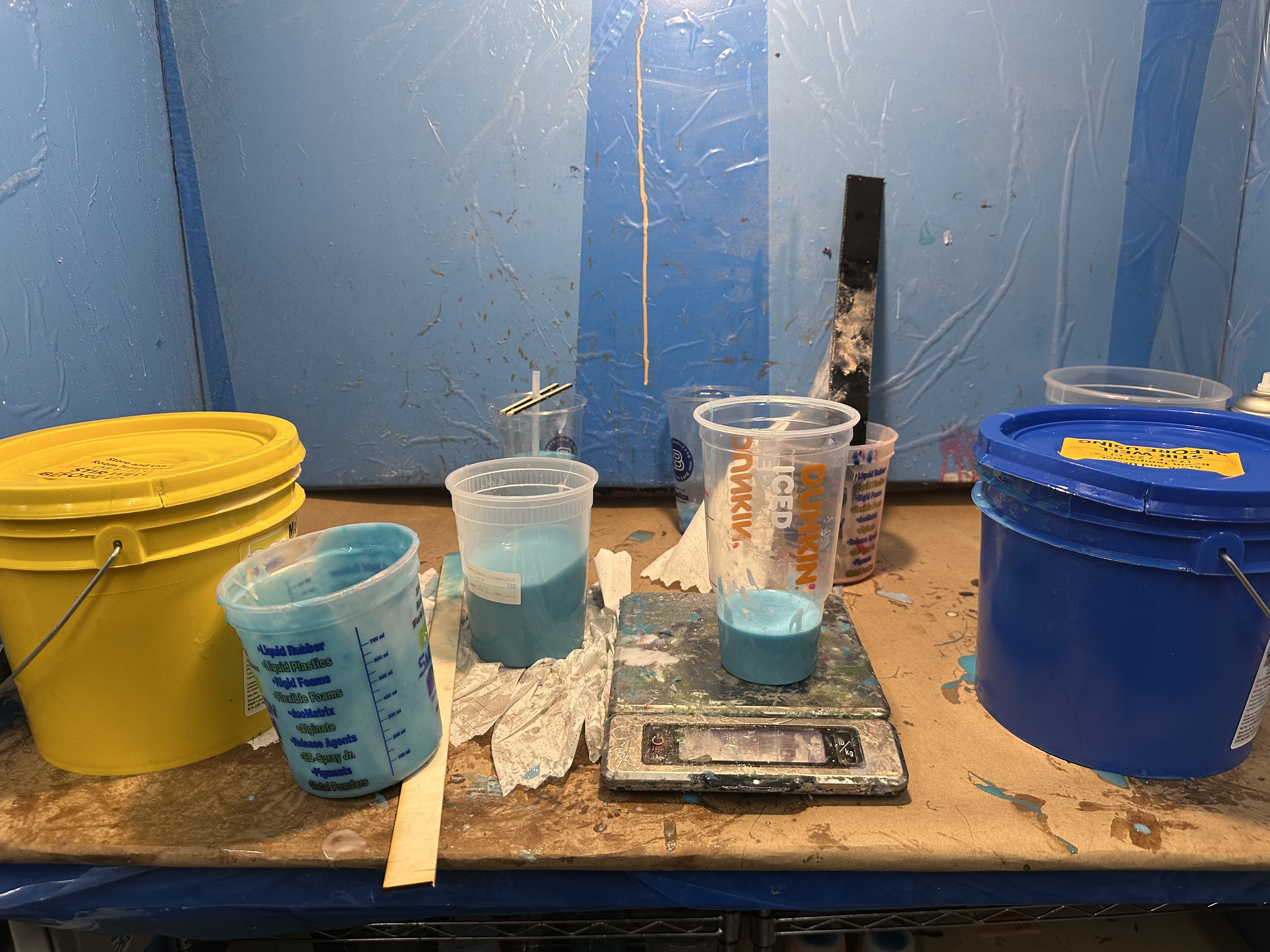
Create silicone molds of macaron halves
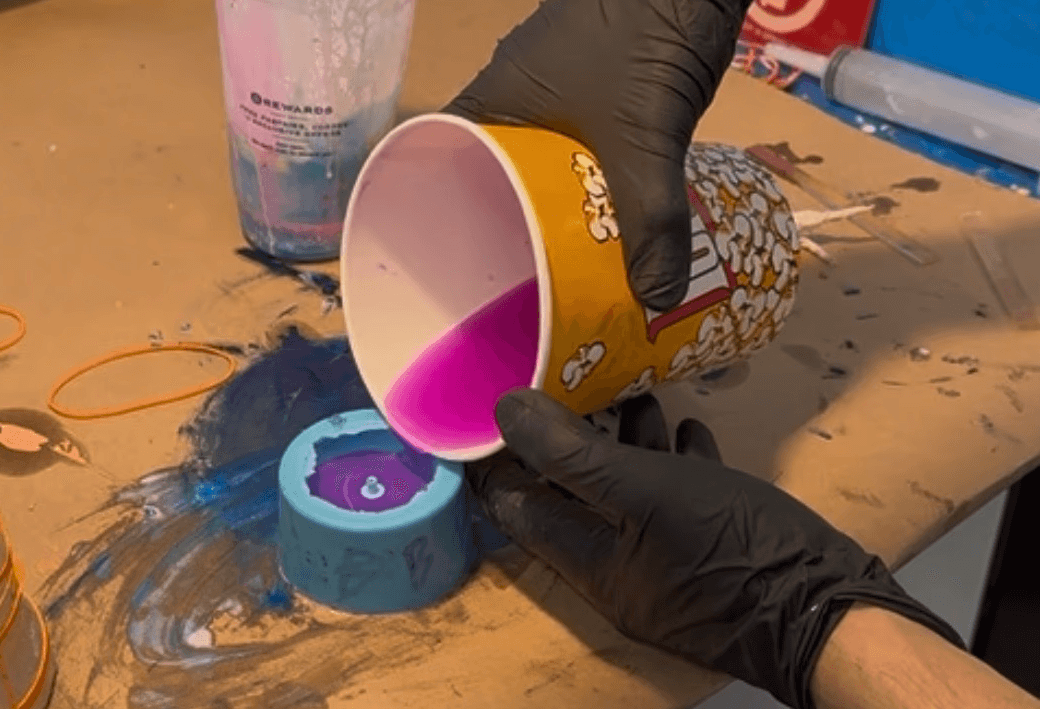
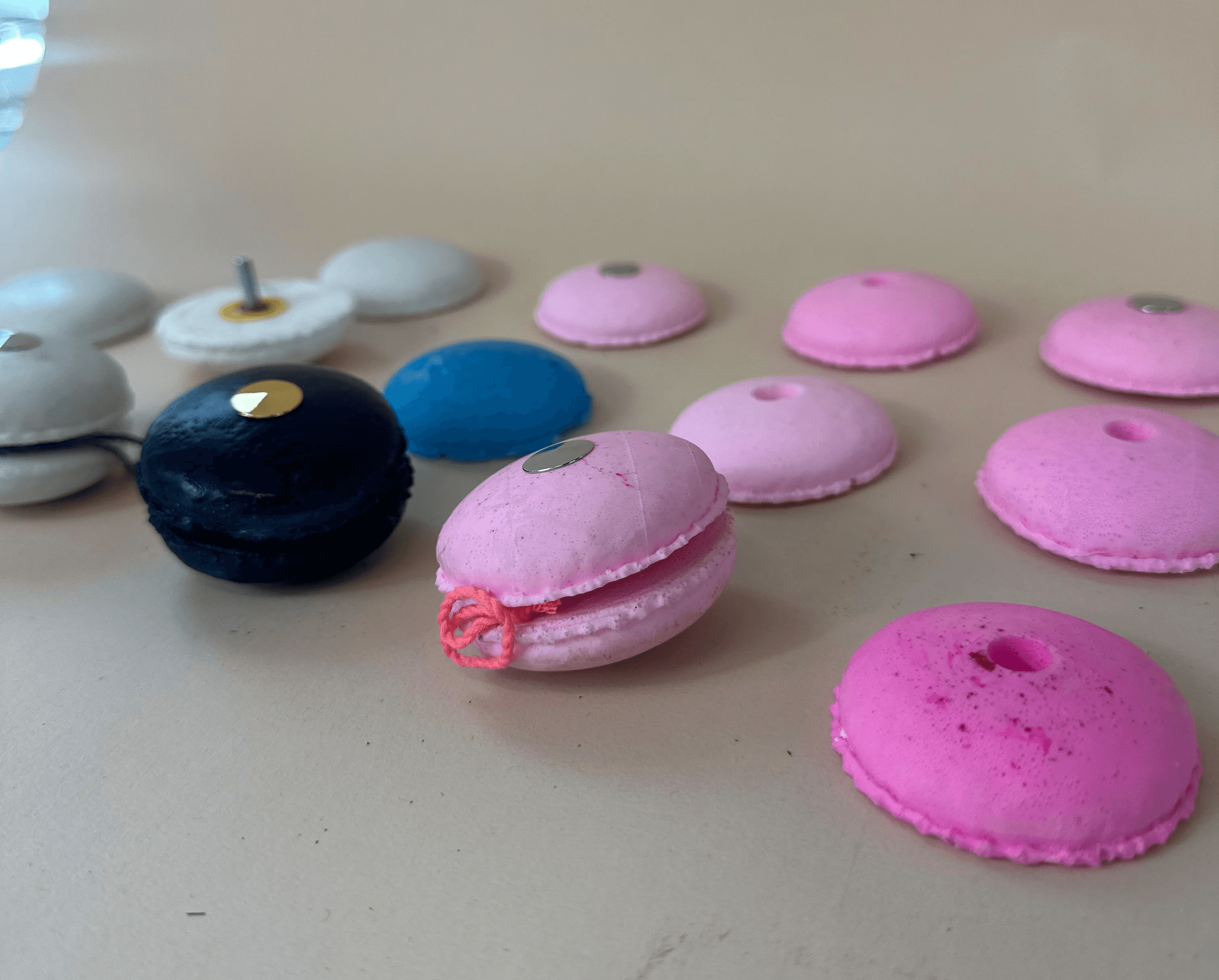
Cast pigmented resin into molds
Vacuum seal resin to prevent bubbles
Cure resin in mold for 24 hours
Remove resin from mold and saw off any attachments
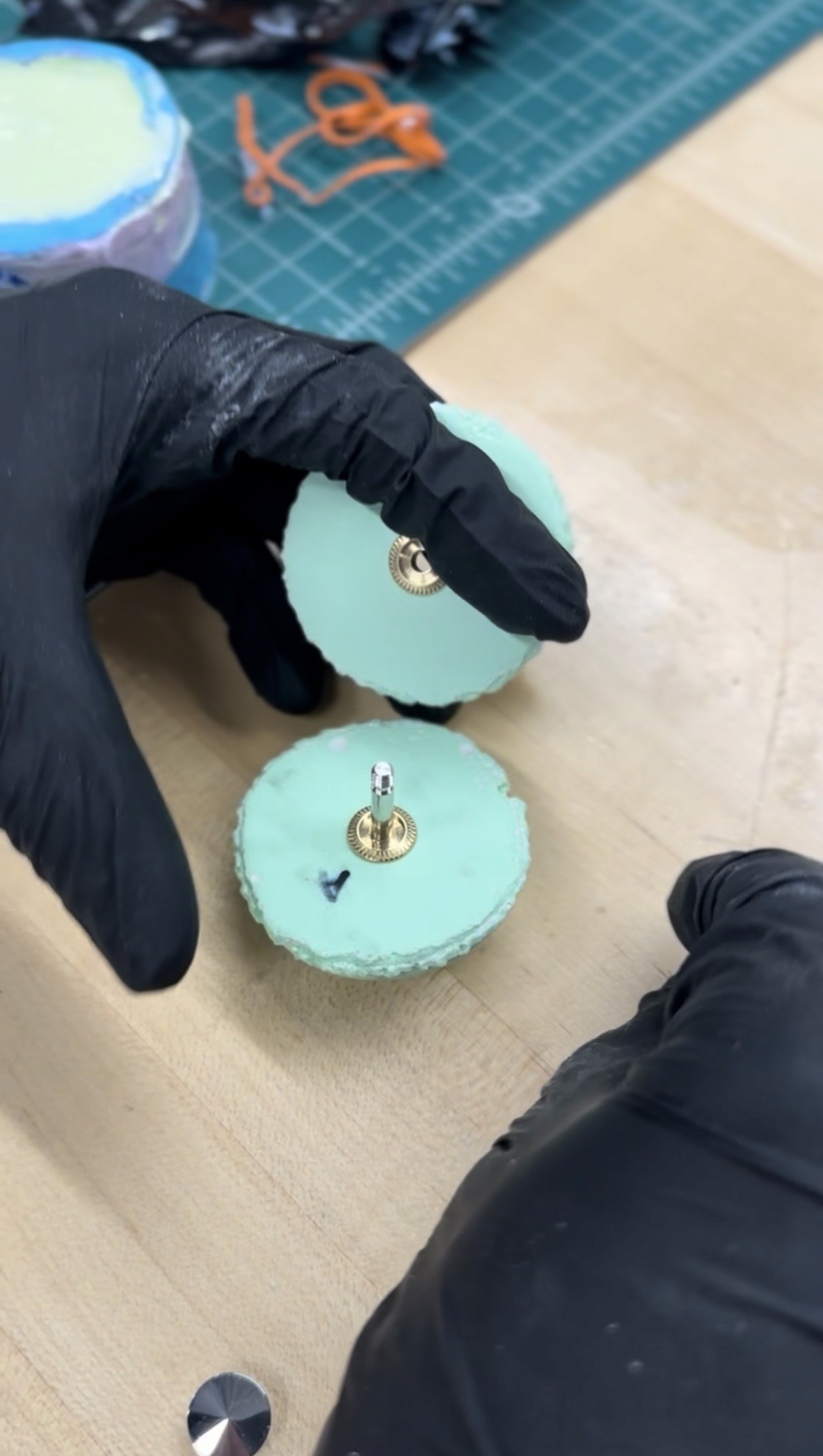
Drill hole in center of each macaron half for axle assembly
Sand and polish for smooth finish
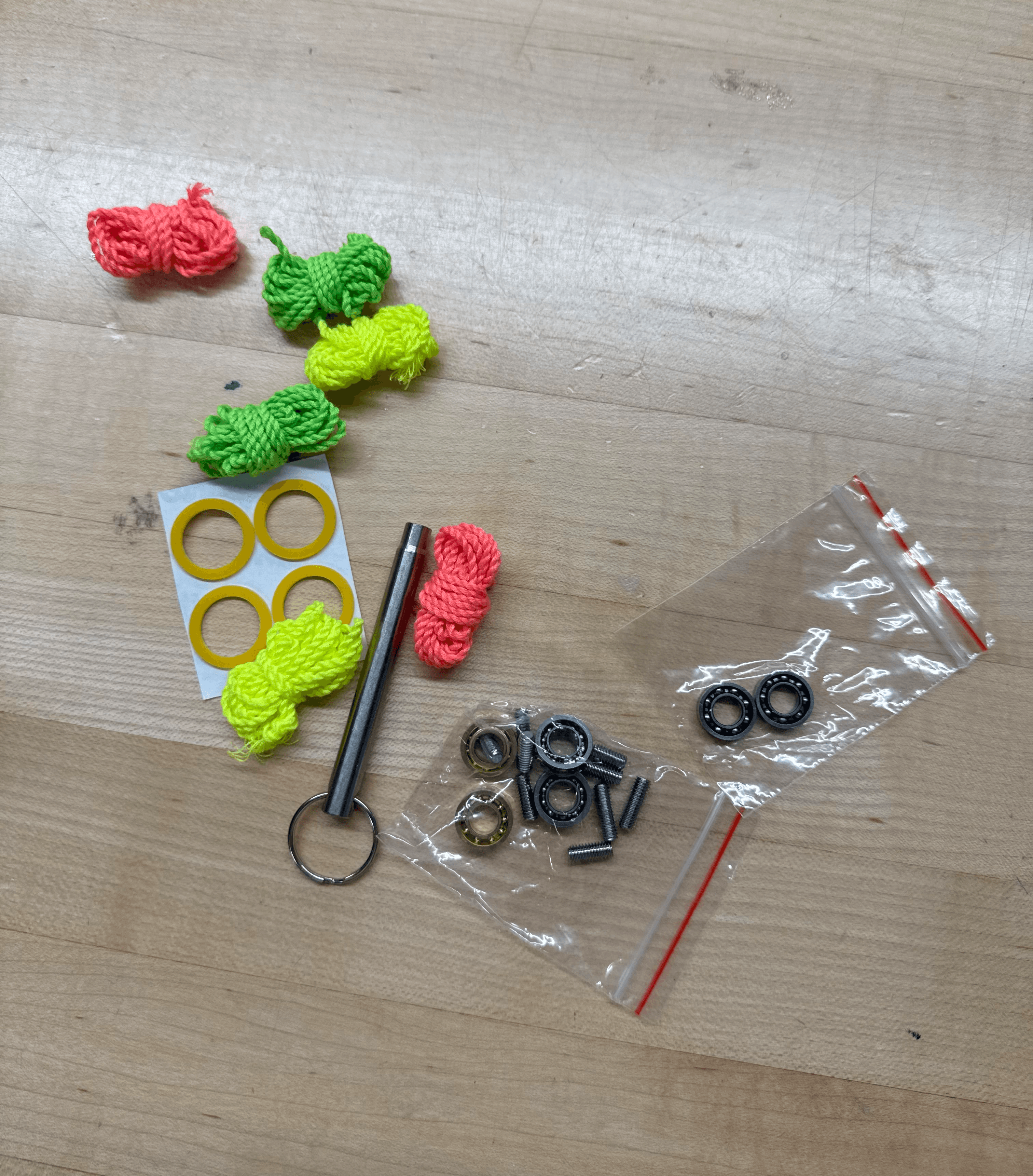
Assemble mechanical components with 2 macaron halves
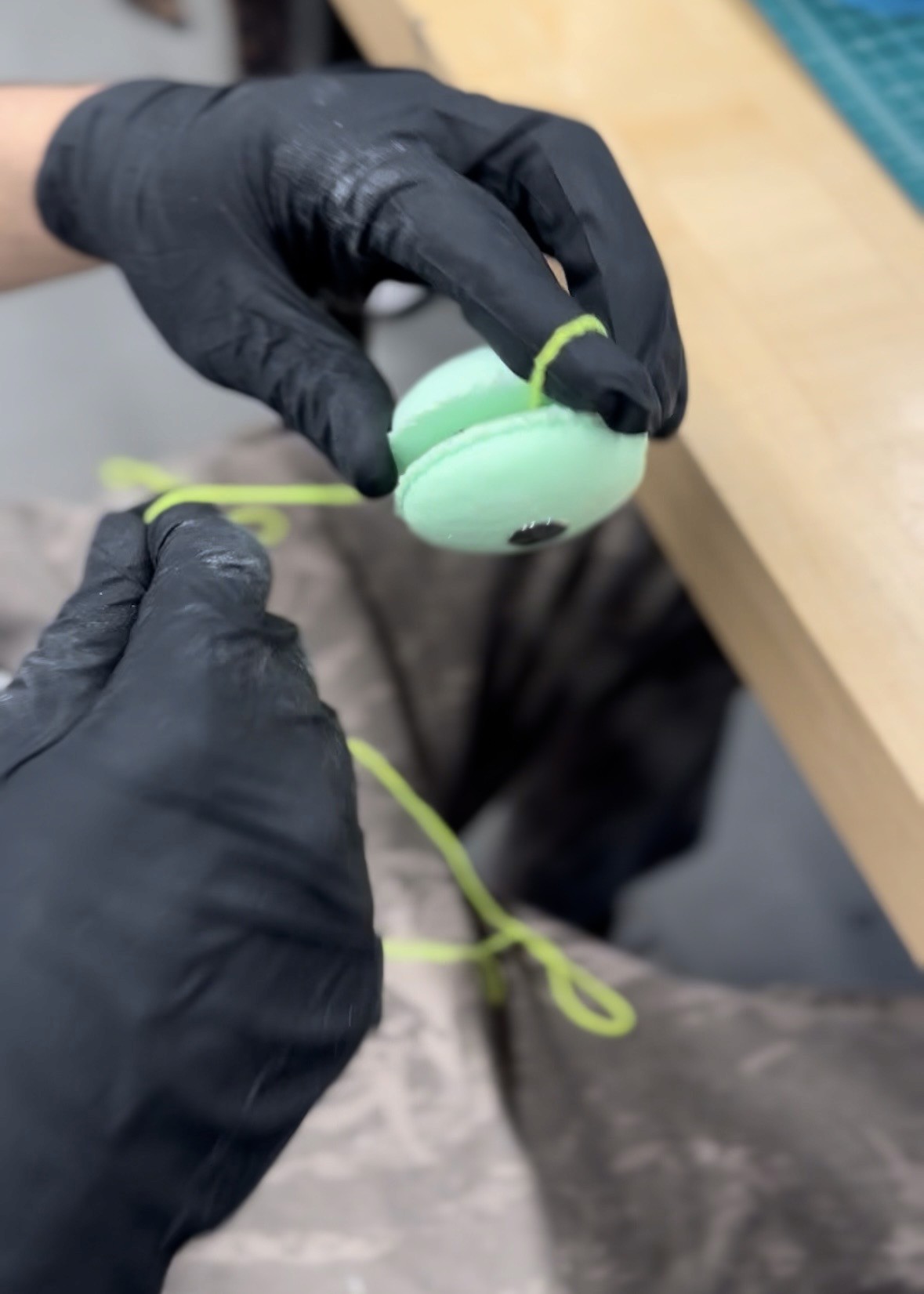
Tie yoyo string around central axle
OUTCOME
Shopping Like a French Pâtisserie
The team wore matching aprons and decorated our booth with baking supplies, custom-designed menus, and flowers.
Customers selected their yoyo from the display tray, which we then packaged with a nice bow.


Customer Feedback
Overall, customers were very excited to use their new yoyos and saw it as an opportunity to return to a playful childhood hobby.
The product also received significant attention from bystanders of our yoyo customers, who wanted to give the yoyo a go.
ITERATIONS
From Sketch to Production
Before arriving at the final macaron, the team explored a range of shapes, mechanics, and materials.
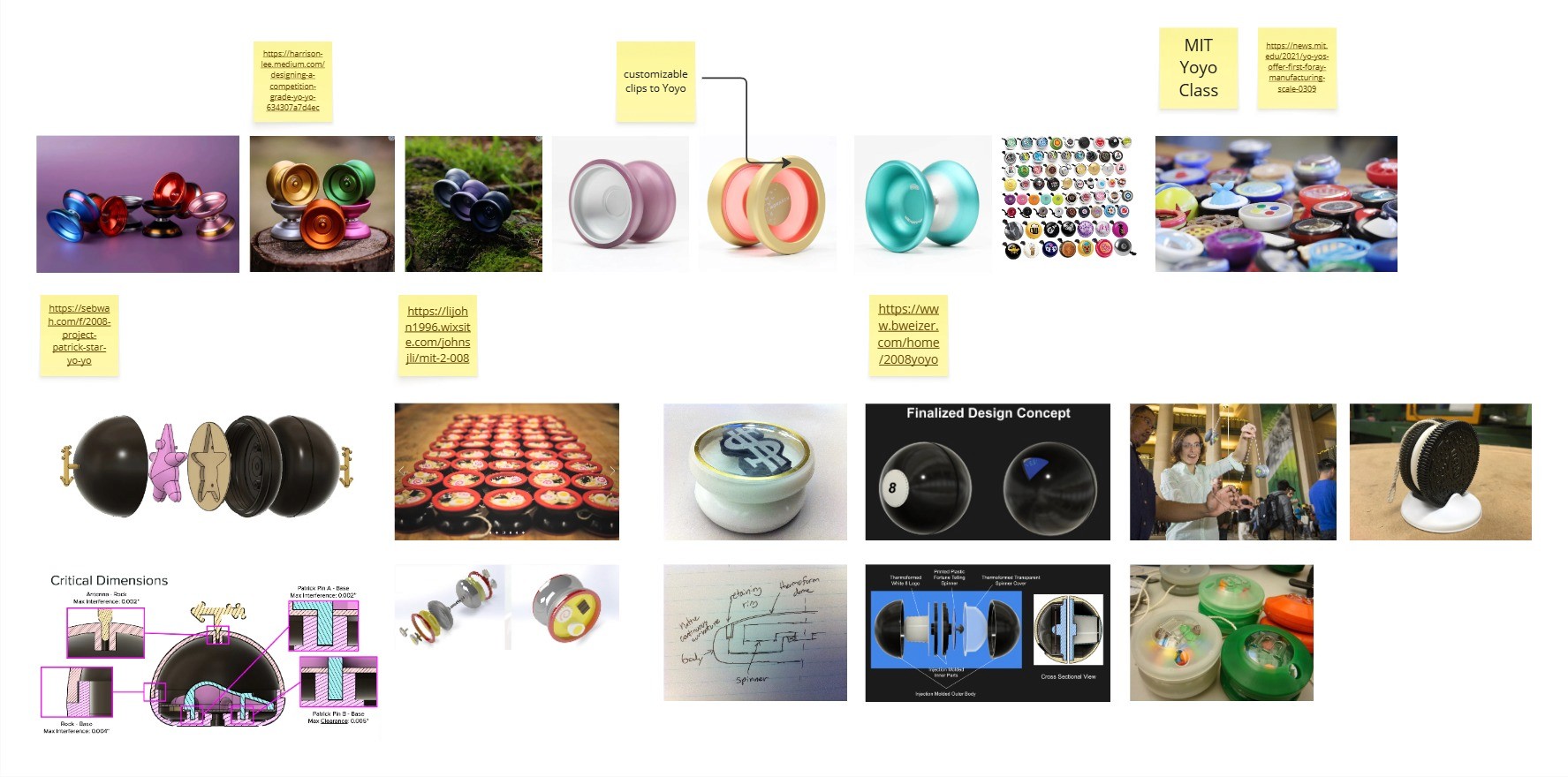
Early Brainstorming (Miro)
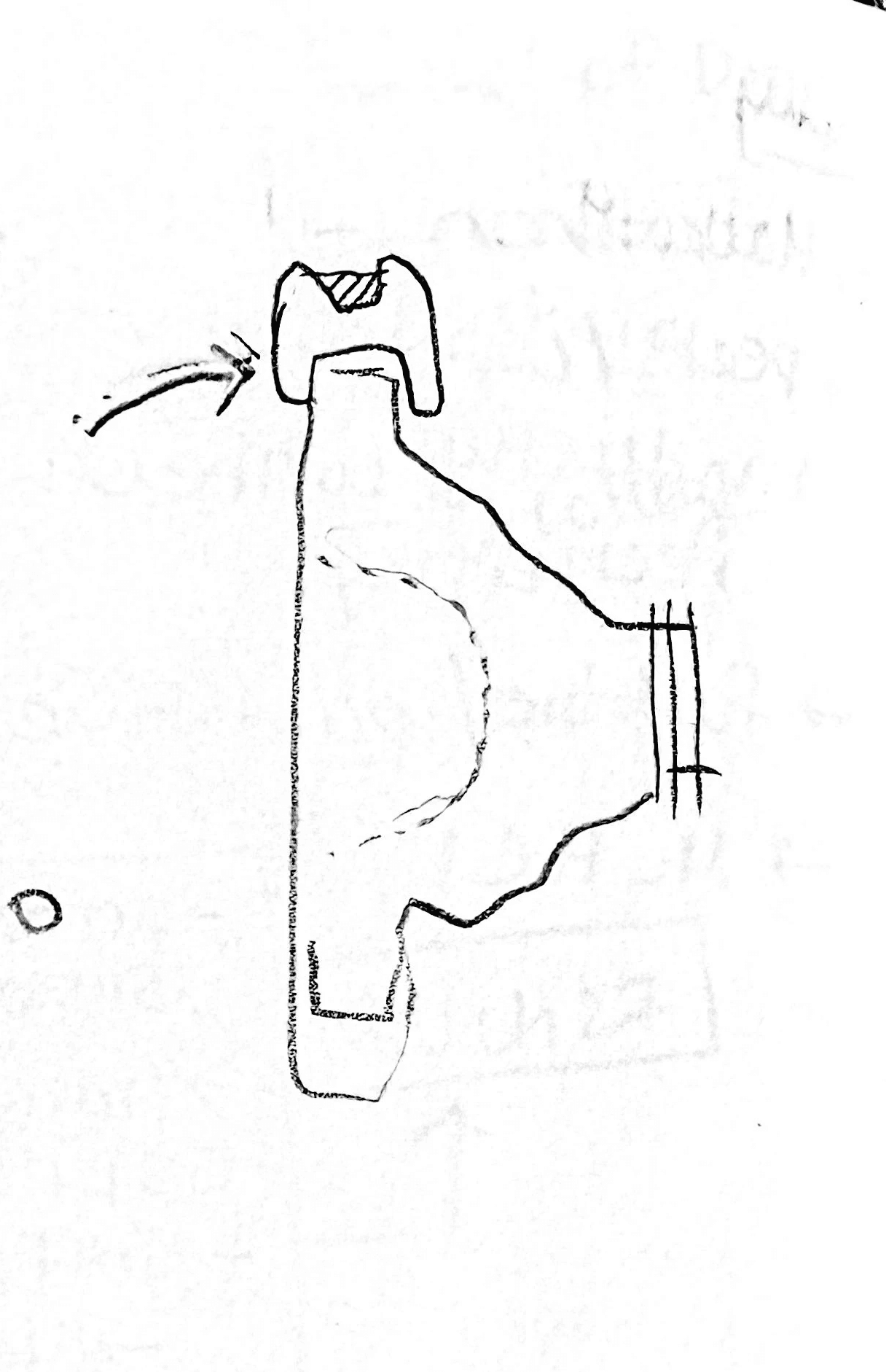
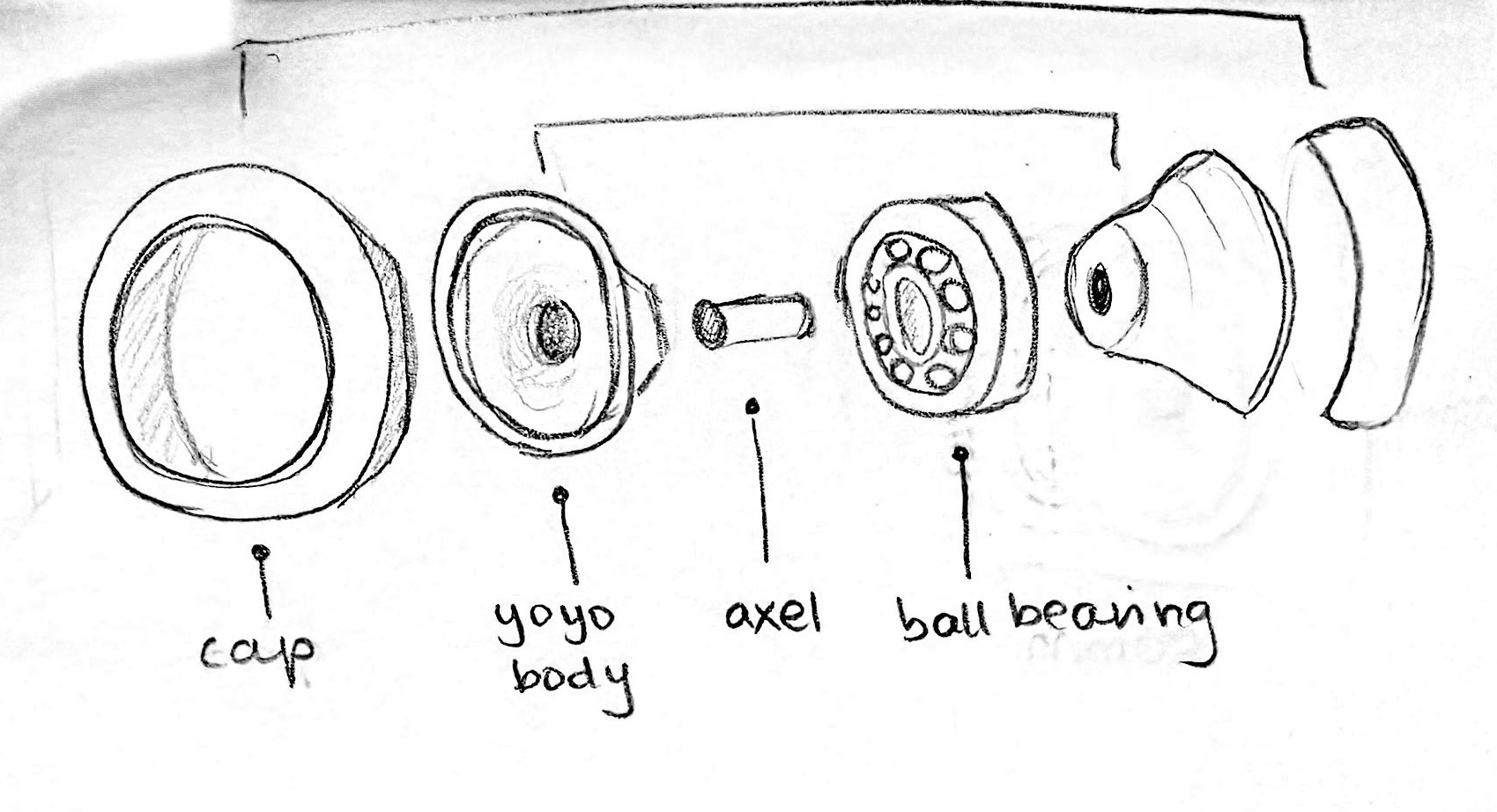
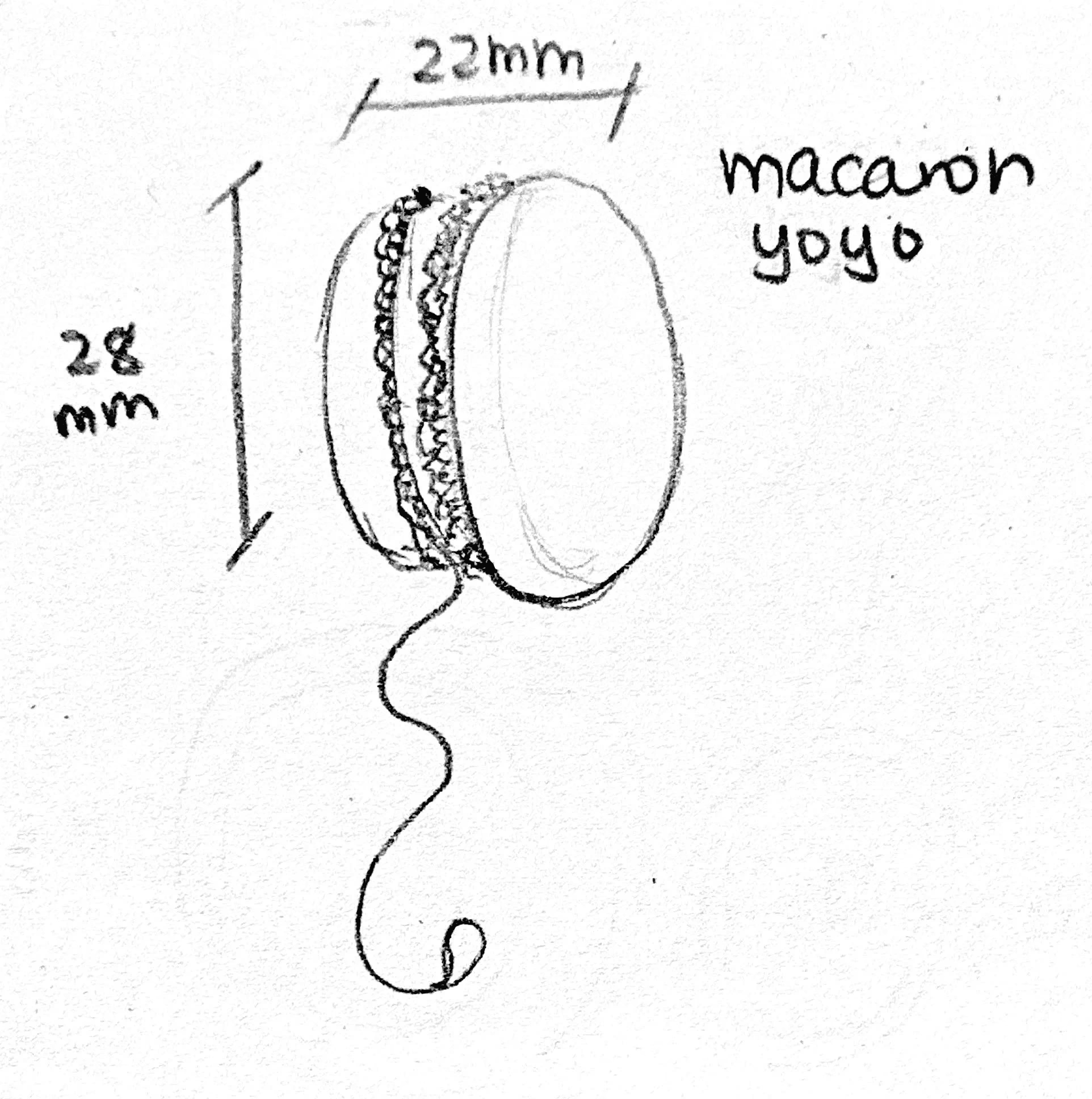
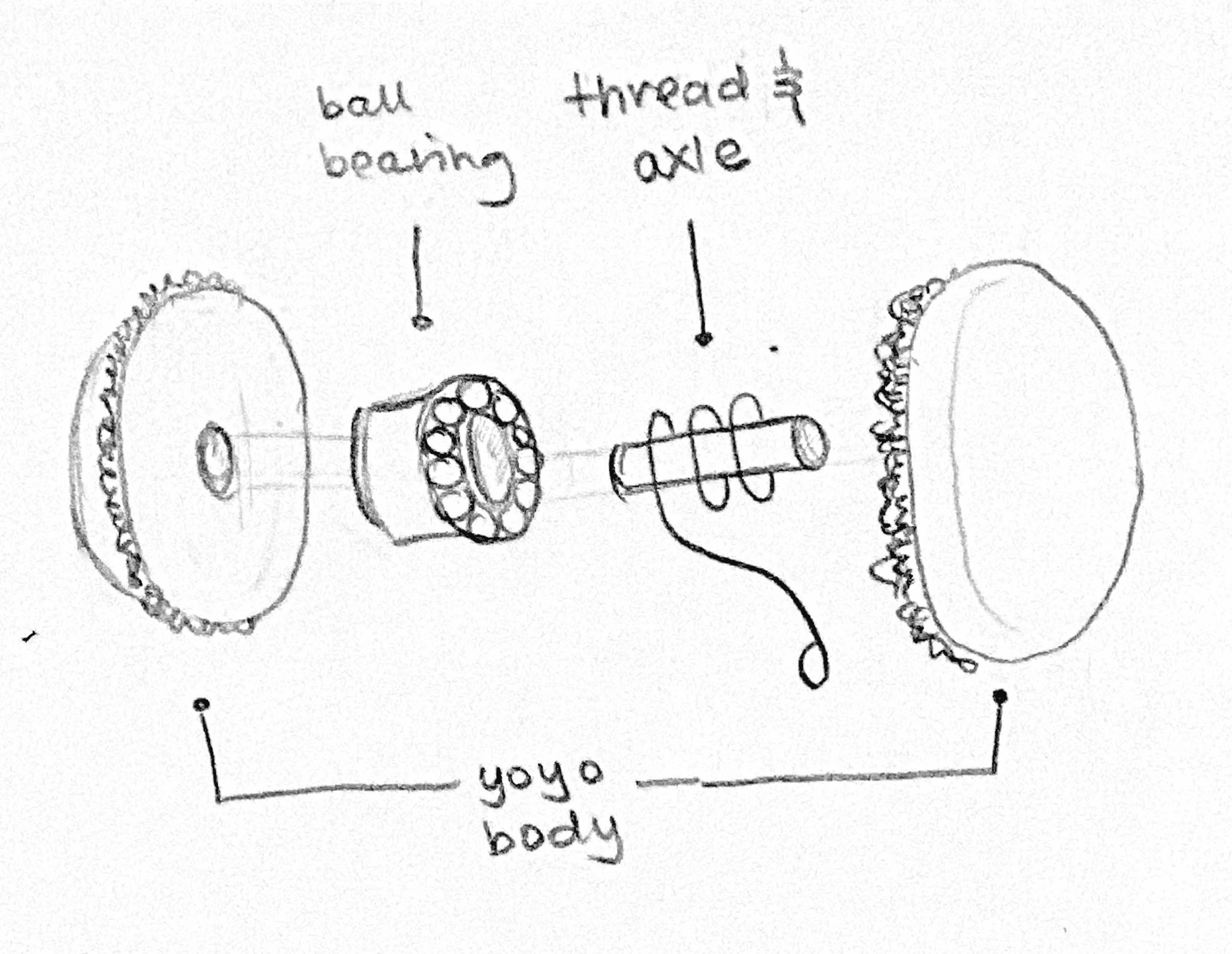
Initial Sketches Exploring Different Yoyo Shapes & Mechanics
Designing the Mold System
Designing the mold system became critical to yoyo performance. Even minor air bubbles or misalignment created uneven weight distribution, preventing smooth return.
Both mold systems were used, but each system had its flaws.
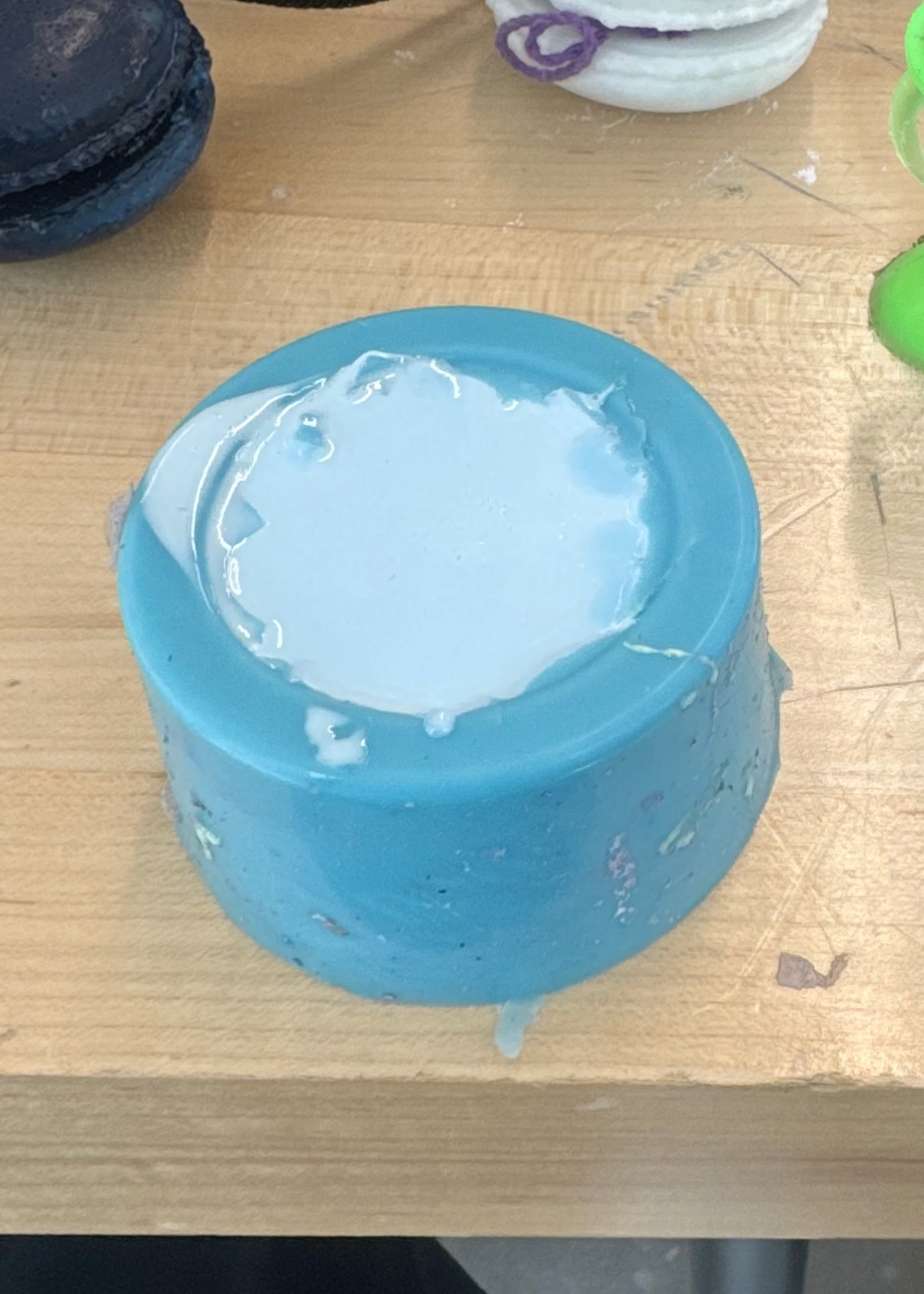
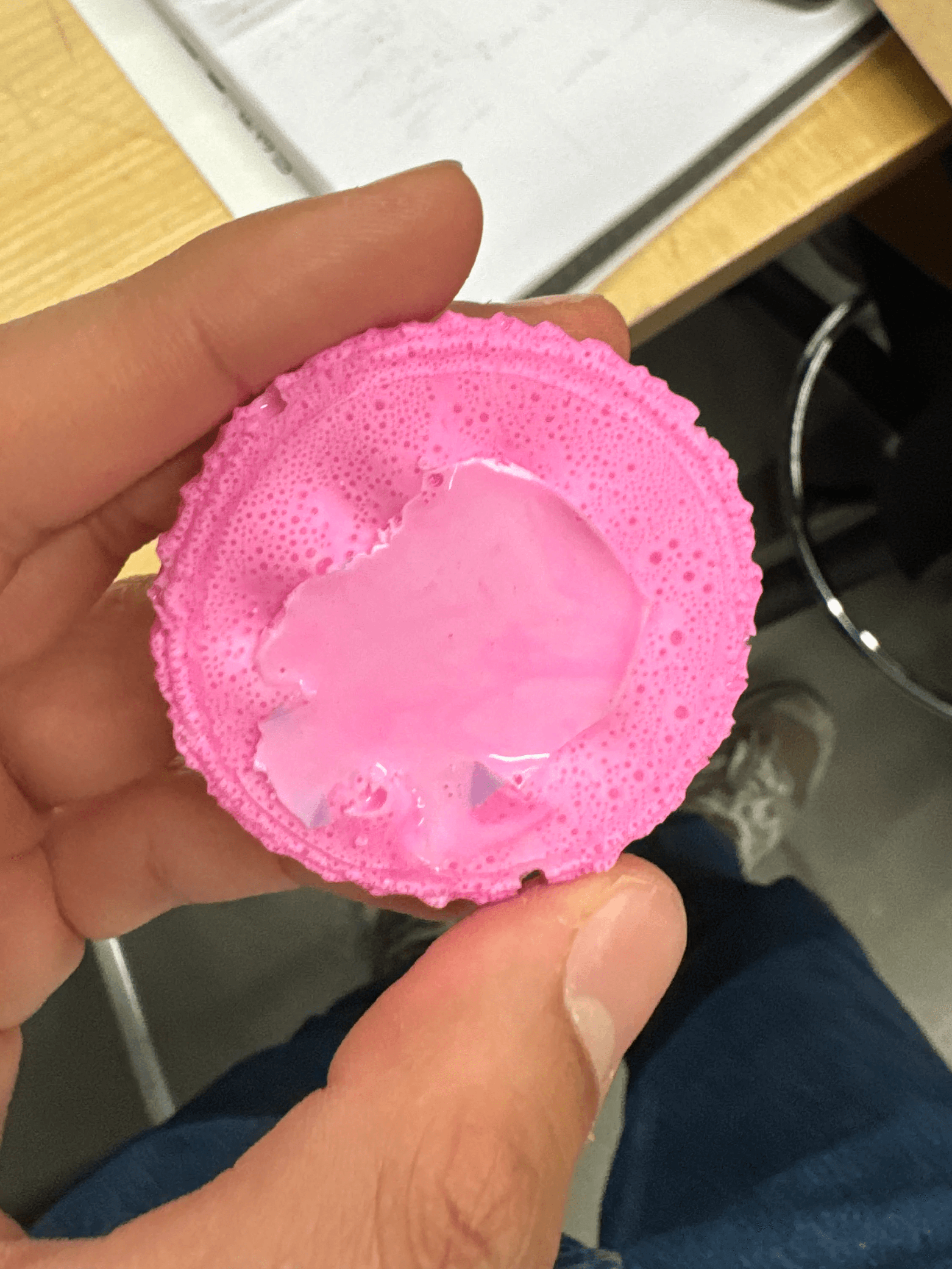
Open-Face Mold
PROS
Less air bubbles
CONS
Rippled & uneven surfaces
Challenging to smoothen out
Surface causes too much friction, preventing yoyo from springing back
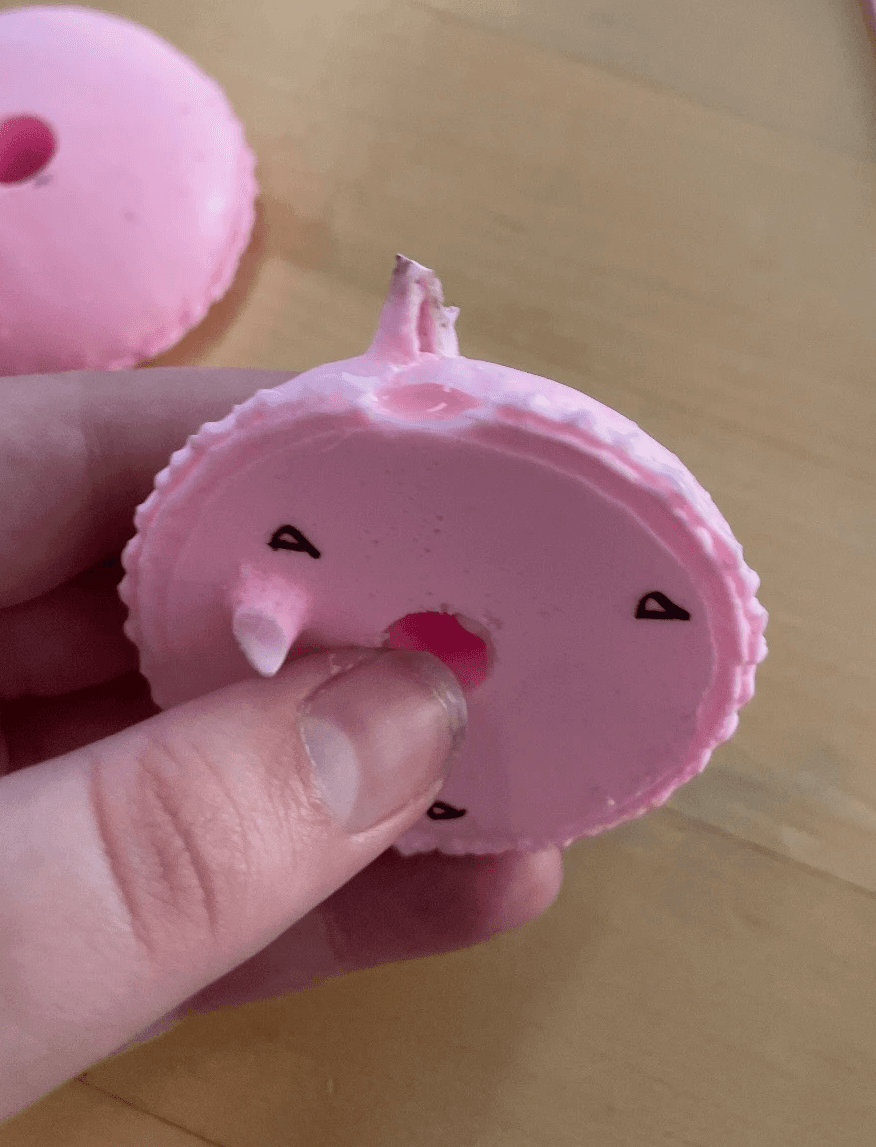
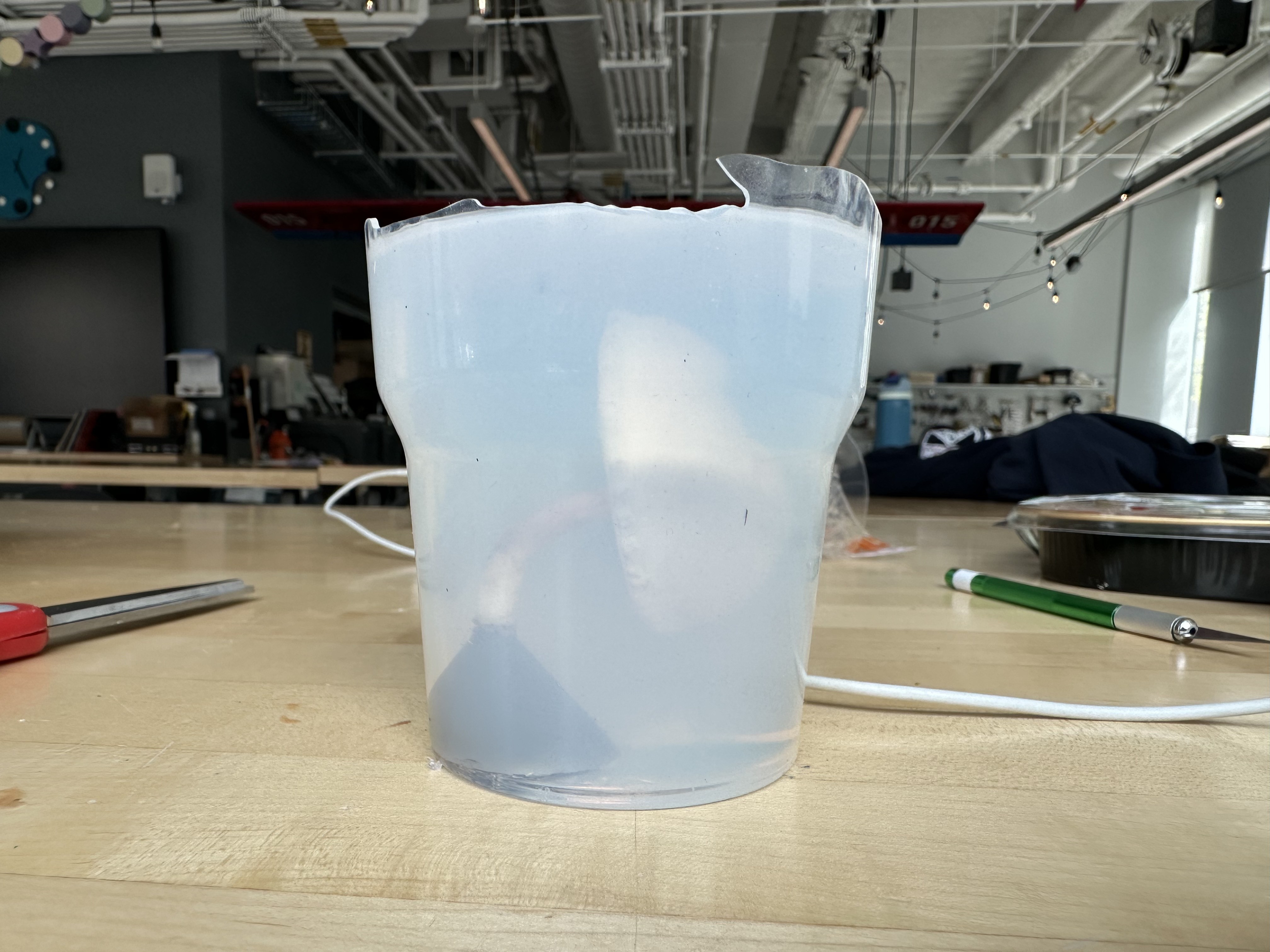
Gated Injection Mode
PROS
Smooth surfaces
CONS
More likely to have large air bubbles, impacting weight distribution
Requires funnel attachments for pour-in casting
Time-consuming to sand off attachments
Choosing the Right Material
Not all materials create the most desired effects.
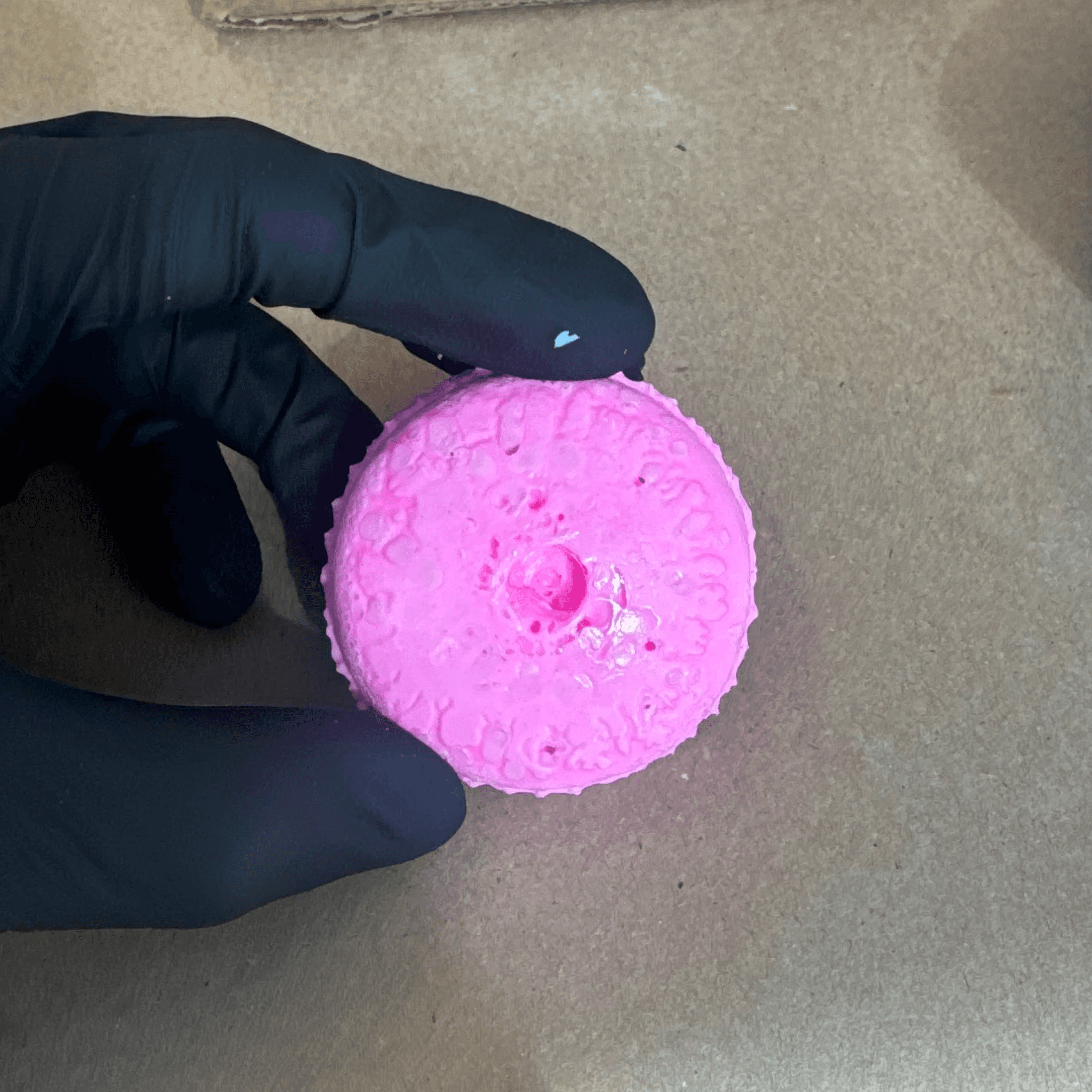
Task 9 Urethan Resin
CHARACTERISTICS
Tough
Plasticky
Shiny
CONS
Produced more bubbles
Feels more brittle and prone to breaking
Harder to sand
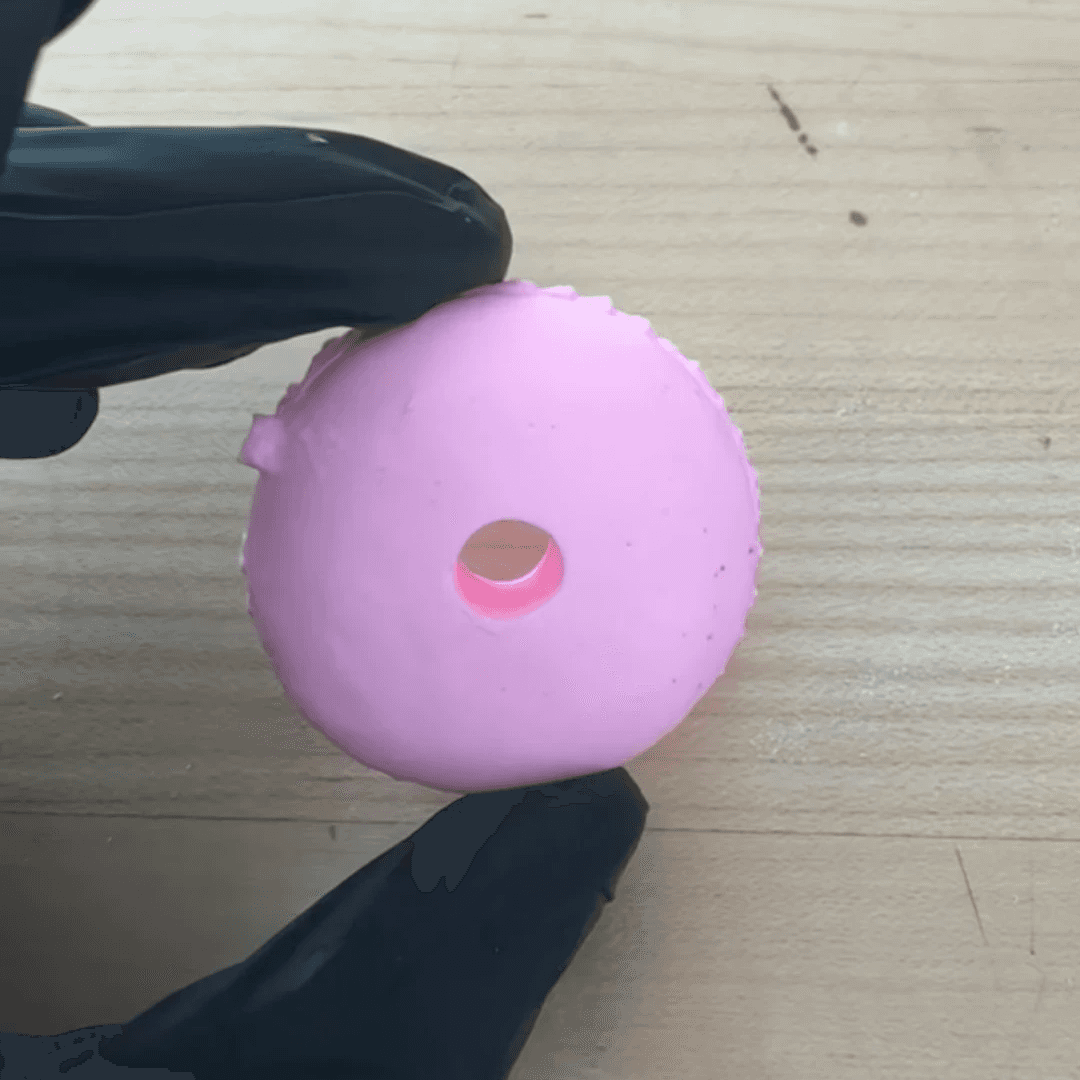
Smooth-Cast 320 Urethane Resin
CHARACTERISTICS
Softer feel
Slightly elastic and bouncy
Matte
PROS
More opaque
Easier to resin color
Smoother texture
Axle Placement & Mechanical Constraints
We had to prioritize functionality over a less aesthetic mechanical system.
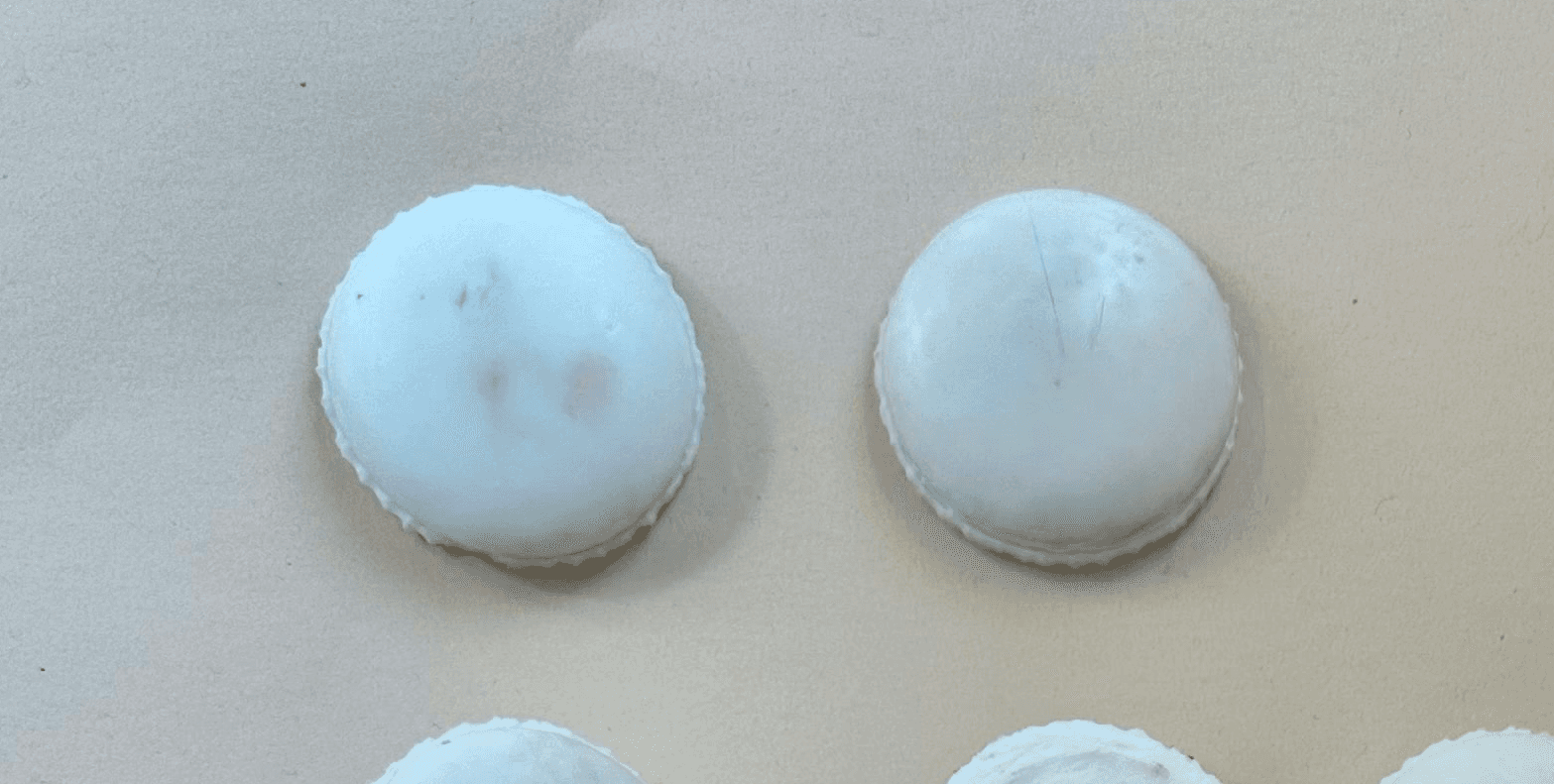
Embedded Axle
PROS
Smoother surface
Aesthetically cleaner
CONS
Requires heat inserts
Weak mechanical system
Easily breaks on impact
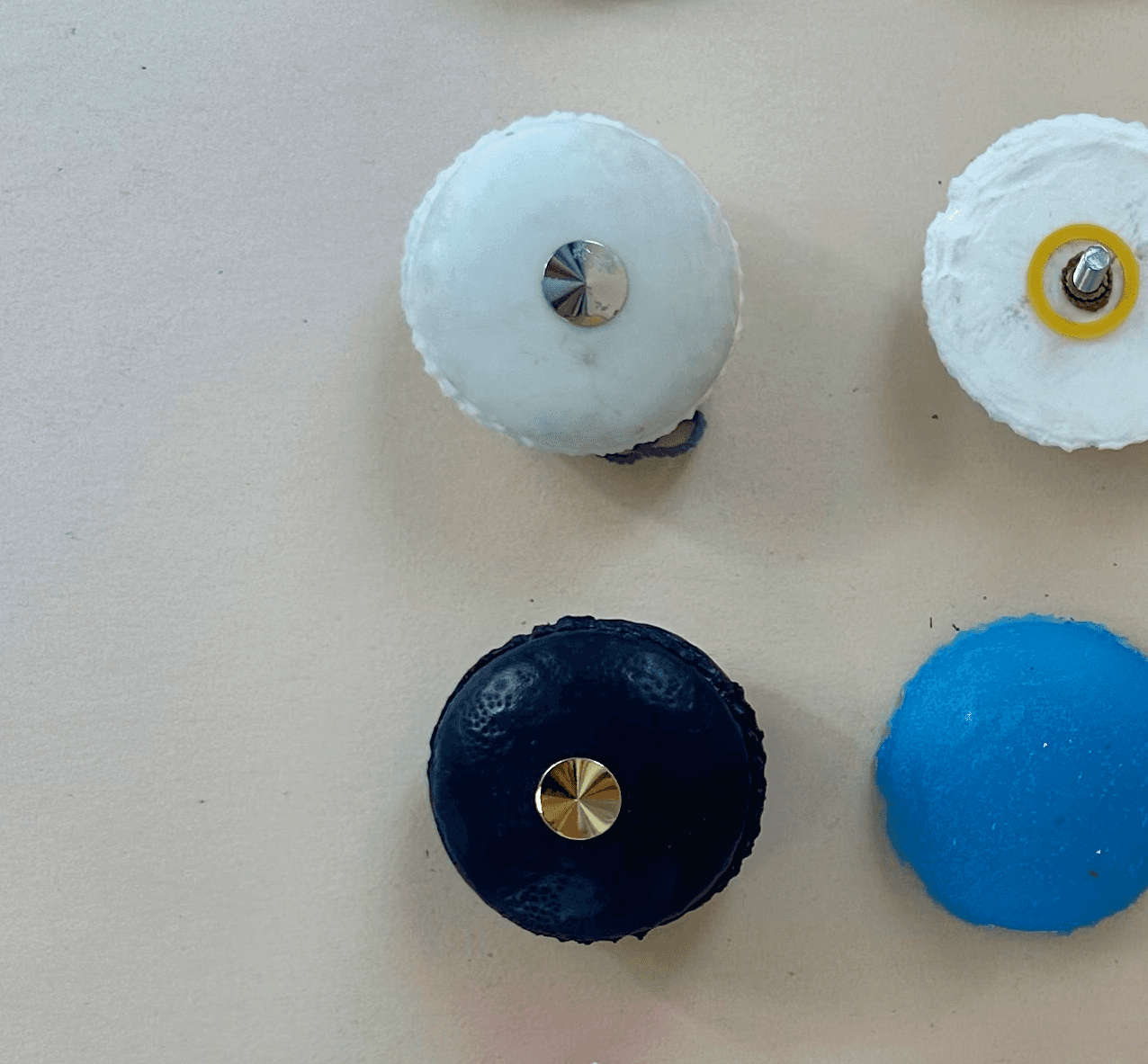
Through-Axle
PROS
Withstands more force without breaking
More mechanically secure
CONS
Metal axle caps visible
Less visually appealing
Other Design Variables
Every design factor became a variable that needed to be tested. From design to material, getting to a successful product required many failed attempts.
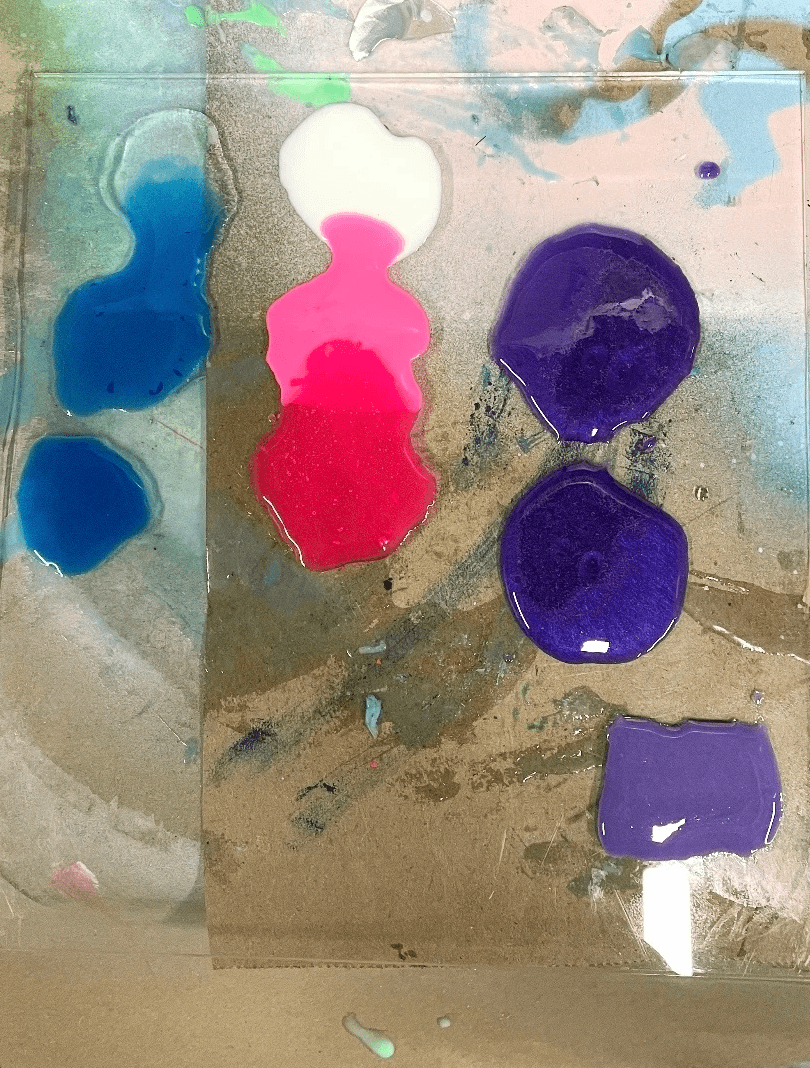
Resin Color
How much white pigment is needed to create pastel colors at the desired opacity?
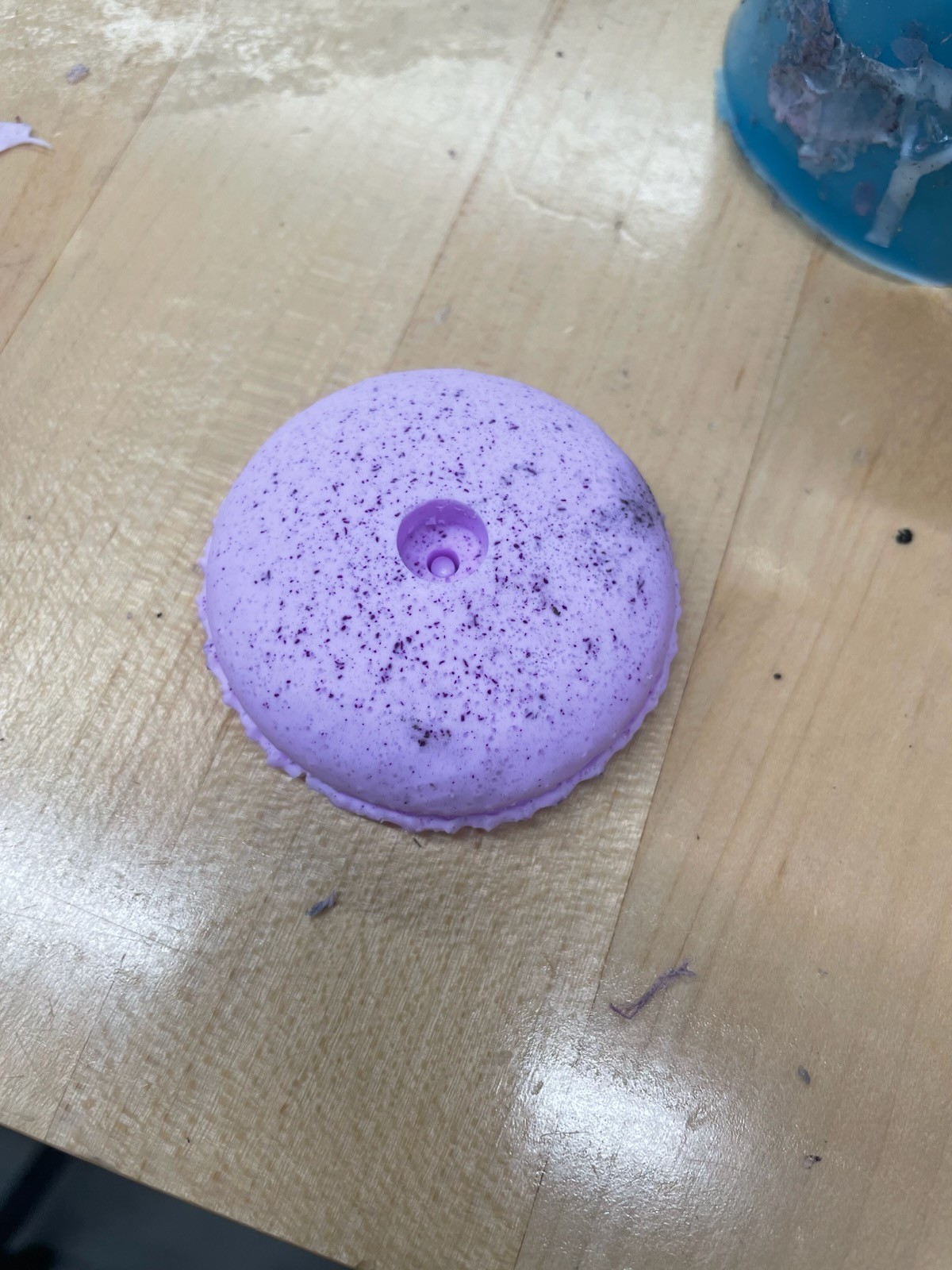
Resin Mixing
How should we prepare and mix the resin pigment to prevent speckling?
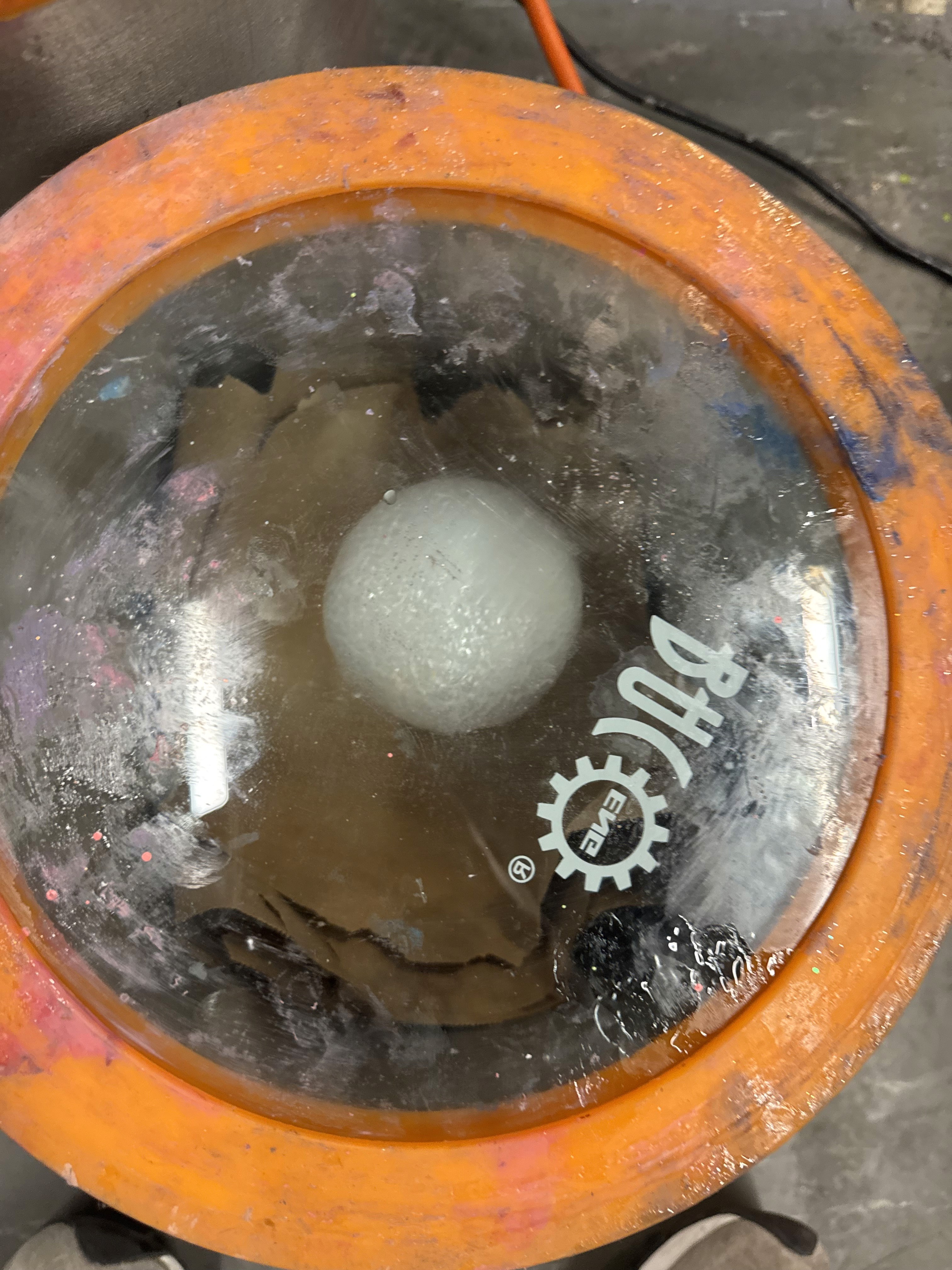
Vacuum Time
How long should the resin sit in the vacuum to remove trapped air without bubbling over?
RESEARCH
Competitive Analysis of Trendy Products
We also analyzed other trendy Gen Z products to understand what made them successful. This research further informed our product strategy.
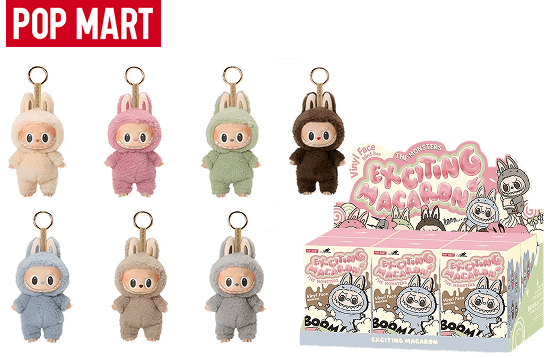
Colorful Collectible Sets
POPMART LABUBUS
Cute monsters with limited edition drops
Each collection comes with 6-7 variations to encourage collection
PRODUCT APPLICATION
Limited release of 5 yoyo colors to encourage collection
Playfully macaron flavor-themed colors
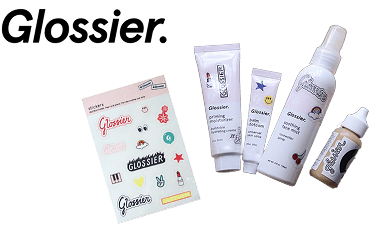
Self-Expression
GLOSSIER STICKERS
Each makeup purchase comes with sticker sheet
Enables personalization & self-expression filler text filler text filler
PRODUCT APPLICATION
Each yoyo purchase comes with sticker sheet
Cute macaron-themed illustrations

Packaging as Product
LIQUID DEATH PACKAGING
Water transformed into party drink through beer can-style packaging
Packaging communicates brand & personality
PRODUCT APPLICATION
Elevated luxury dessert boxes
Communicate macaron-yoyo analog
REFLECTION
Lessons Learned
Building a physical product line 0 → 1 taught me that material constraints are unforgiving in ways digital work isn't.
Design for Manufacturability
Details that looked great in the 3D model created friction in production.
For example, the jagged macaron "feet" produced molds that trapped air bubbles and required intensive sanding.
I'd now evaluate every design decision by how forgiving it is to make at scale.
Mechanical Viability First
The team invested significant time in molds, materials, and color matching before confirming the yoyo reliably returned to hand.
When early casts failed due to axle type, we had to reverse decisions that already felt final.
Aesthetic tradeoffs had to be made for mechanical functionality.
Every Variable Needs Testing
Variables that seemed minor each had the potential to break the product.
A slightly off vacuum time left bubbles that threw off weight distribution. Too little white pigment made colors translucent instead of pastel.
Every variable is a hypothesis that needs a stress test.
MORE PROJECTS
If you made it this far, check out more projects :)